
Blog
Drum Carder Safety Tips for Home Studios
Jul
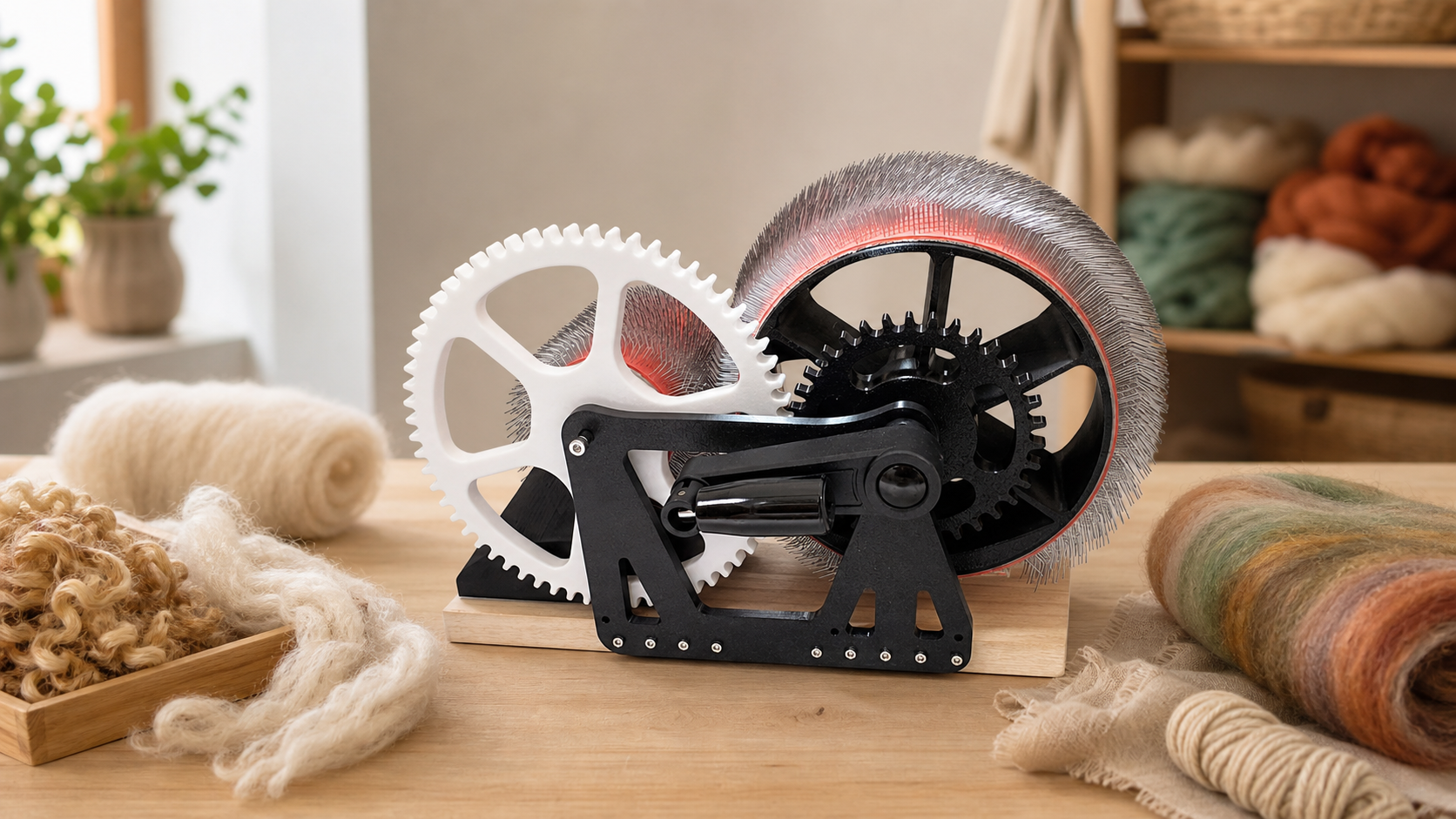
Quick answer: drum carder safety in a home studio depends on a stable surface, clear hands, secured hair and clothing, light feeding, dry prepared fiber, careful cleaning, and a habit of stopping whenever the tool feels different. Most safety wins are ordinary studio habits repeated every session.
A home studio may also be a spare room, dining table, basement corner, or shared craft bench. That makes safety less about dramatic rules and more about controlling the scene before fiber ever reaches the carder. Good setup reduces rushing, crowding, and the small distractions that cause trouble.
Start With The Room, Not The Fiber
Put the carder on a stable table or bench that does not wobble. Leave room for prepared fiber, batt removal, notes, and cleanup. A crowded table invites reaching across the tool, dropping labels into the fiber, or turning the handle while looking somewhere else.
Move drinks, cords, scissors, shipping labels, and loose packaging away from the active area. If the carder shares space with dye work, photography, or order packing, reset the table before each session. A five-minute room check is faster than untangling a preventable mistake.
Good lighting belongs in this check too. Shadows make it harder to see stray fiber, jewelry, or a small tool near the feed area. If you work at night, add a task lamp before the session starts. The safest table is the one where you can see the fiber path without leaning over the carder.
Make Yourself Safe To Work
Tie back long hair. Secure loose sleeves. Remove bracelets, long necklaces, dangling apron ties, and anything that can drift toward moving parts. Keep both hands aware of the carder while feeding. If you need to answer a phone, adjust music, or talk to someone entering the room, pause first.
Good posture helps too. Stand or sit where your shoulders are relaxed and your hands do not need to stretch. Tension encourages pushing, and pushing is a warning sign. A carder should be fed with light control, not force.
Feed Less Fiber Than You Think
Dense fiber leads to force. Force leads to risk and poor batts. Open the fiber first, remove obvious debris, and feed small wisps. If the fiber resists, pull back and prepare it more. Damp, matted, or tightly packed fiber should not be treated as a problem the carder must solve in one motion.
This habit also improves results. Light feeding gives the drum a chance to build an even web. If your goal is cleaner carded wool, the guide to smoother batts explains why preparation before feeding matters so much.
Use Stop Points During The Session
Choose stop points before you begin: after the first layer, when the handle feels heavier, before removing the batt, and before cleaning. At each stop, look at the fiber path and ask whether anything feels wrong. Resistance, snagging, sudden noise, or a crowded drum should interrupt the session.
Never force a hard turn. Stop feeding, release tension if safe, and inspect calmly. If the tool still feels wrong when the fiber is removed, do not keep testing it by strength. For product-specific questions, use the contact page and explain the fiber, the step, and the change you noticed.
When you teach another person, say the stop points out loud. New makers often watch the finished batt instead of the feed area. A shared pause rule keeps the session calm and gives everyone permission to slow down before a small problem becomes a bigger one.
Clean And Store With The Same Attention
Cleaning is still part of the work session. Remove loose fiber gently and use only methods that suit the tool. Avoid improvising with sharp objects unless you know they are safe for the working surface. Clear the table, roll or store finished batts, and keep small add-ins away from the carder after use.
In shared homes, storage matters. If children, visitors, or pets can enter the room, do not leave the carder exposed as an object of curiosity. Cover it or store it in a responsible place. Safety continues after the last batt leaves the drum.
Think About Safety Before Buying
A product that fits your actual workspace is safer than one that forces awkward handling. Review the Studio Drum Carder page with your room in mind. Picture where the fiber waits, where your hands move, how the batt comes off, and where the tool rests between sessions.
The DrumCarder homepage can help you start from the main product path, and the shipping policy is worth reviewing before you order. A calm buying process supports a calm studio process.
Set Up A Calmer Fiber Bench
Compare the Studio Drum Carder with your home studio layout, storage plan, and small-batch fiber routine before you buy.
FAQ
Is a drum carder safe for a beginner at home?
It can be, when the beginner works slowly, feeds light layers, keeps hands and clothing clear, and stops whenever the tool feels wrong.
What should be removed from the table first?
Move drinks, scissors, cords, loose tags, packaging, phones, and unrelated tools away from the active carding area before the session begins.
What should I do if the handle feels hard to turn?
Stop feeding immediately. Inspect for overfilled fiber, dense clumps, or anything caught. Do not force the turn to see whether it clears itself.
Can children help with drum carding?
Only with close adult supervision and very clear rules. In many homes, it is better for children to watch, sort fiber, or help label finished batts away from the tool.
How should I clean between blends?
Remove the batt, lift loose fiber gently, inspect the working area, and reset the table before adding a new color or fiber type. Avoid rough cleaning tools unless they are known to be suitable.