
Blog
How to Make Batts for Chunky Art Yarn
Jul
Quick answer: to make batts for chunky art yarn, card a supportive wool base first, then add texture, color, locks, silk, sparkle, or fabric bits in controlled layers. Keep the batt open enough to draft by hand and textured enough to show personality once it becomes coils, slubs, corespun yarn, or expressive singles.
Chunky art yarn is forgiving in one way and demanding in another. It can celebrate texture that would look uneven in fine spinning, but the batt still needs structure. If every add-in is piled on at once, the yarn may shed, snag, or refuse to draft. A drum carder helps organize the chaos so the finished yarn looks intentional rather than accidental.
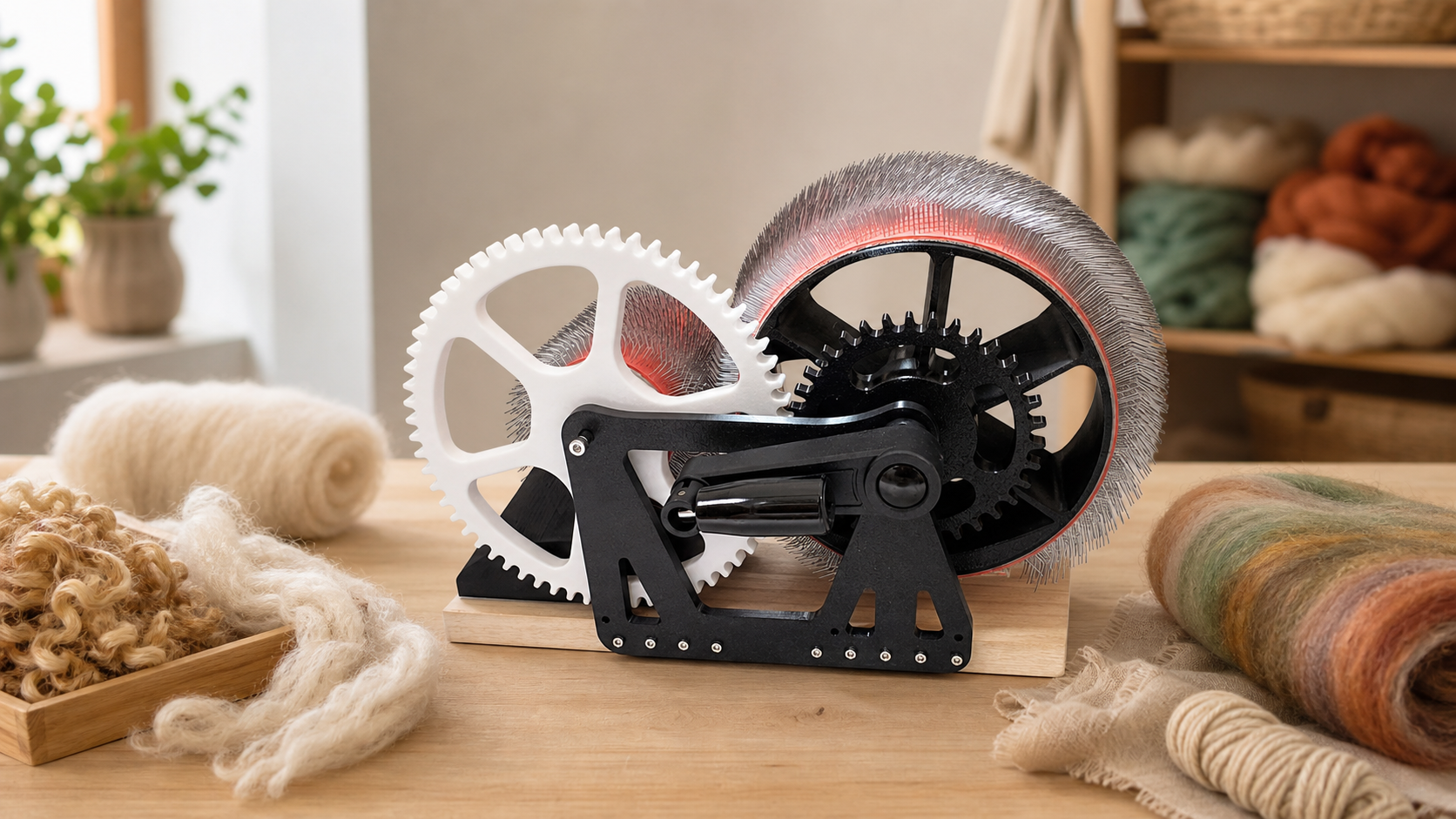
This workflow is for spinners who want bold batts with practical control. If you are considering a dedicated prep tool, review the Studio Drum Carder and compare the routine with your current table, fiber stash, and spinning wheel setup.
Choose A Wool Base That Can Carry Texture
A chunky art batt needs a base fiber that can hold the blend together. Wool is the usual choice because it has grip and memory. The base does not have to be expensive or perfectly smooth, but it should be clean, dry, and open. If the base is too slippery, the add-ins may fall away while spinning. If it is too matted, the batt becomes hard to draft.
Start with more base wool than decoration. A useful rule for beginners is to make the first batt calmer than your imagination. You can always add more texture in a second batt, but it is difficult to rescue a preparation that is overloaded with slick or chunky pieces.
Sort Add-Ins By Behavior
Not all art yarn materials behave the same. Locks want to remain visible. Silk adds shine but can drift. Sparkle spreads quickly. Fabric strips and yarn scraps need careful placement. Alpaca adds softness but may reduce grip if used heavily. Sorting these materials before carding helps you decide what belongs inside the batt and what should sit near the surface.
Make three small piles: blendable color, visible texture, and special accents. Blendable color can go in early. Visible texture often works best in the last light pass. Special accents should be used sparingly so they do not jam the drafting path or dominate the entire yarn.
Layer The Batt For Drafting Control
Feed a thin base layer first. Add color in broad sections. Add locks and larger texture in small amounts, watching how the drum catches them. Cover very slippery accents with a whisper of wool so they stay connected. If the batt looks exciting but fragile, add another light base layer rather than more decoration.
For chunky art yarn, the batt should pull into strips without falling apart. Test this before you card a full set. Pull a strip from the edge and mimic your drafting motion. If the strip sheds too much, the texture needs more wool around it. If it refuses to pull, the feed was too heavy or the materials are tangled.
Preserve Drama Without Making A Mess
The temptation is to add everything: locks, silk, nepps, sparkle, sari strips, and every bright color in reach. A better approach is one main drama and two supporting details. For example, choose long locks as the main feature, then support them with a warm color shift and a little shine. Or choose bold color blocks, then add small texture touches.
This restraint makes the finished yarn easier to design with. A chunky skein already has size and movement. If every inch is competing, the yarn may be hard to knit, weave, or sell. Controlled drama lets the maker see what is special about the batt.
Strip The Batt For Your Spinning Style
After removing the batt, decide how it will feed into the wheel. For corespinning, pull wider strips that hold texture near the surface. For thick singles, split the batt into narrower sections and pre-draft lightly. For coil or beehive yarn, keep some areas chunkier so they can build raised shapes. Store each strip in order if color progression matters.
Do not compress the batt before spinning. Chunky art yarn relies on air, texture, and visible movement. If you pack the batt too tightly, you may have to fight it at the wheel and the decorative materials can clump.
Use A Repeatable Carding Recipe
When an art batt works, write down the recipe while it is still fresh: base fiber, colors, accents, order of feeding, number of passes, and how the strips were pulled. A studio that sells batts or finished yarn needs repeatability, even when every skein is expressive. Customers may not expect identical yarn, but they do notice when a color family or texture style is consistent.
The Studio Drum Carder product page is a useful stop if you want a dedicated tool for these repeatable sessions. For fit, order, or store questions, use the contact page before checkout.
Card Batts For Chunky Art Yarn With More Control
Build expressive batts with a steady base, intentional texture, and a product workflow that fits your spinning bench.
FAQ
What fiber should form the base of a chunky art yarn batt?
Wool is usually the easiest base because it grips decorative fibers and drafts with control. Add softer or shinier fibers after the wool structure is established.
How much texture can I put in an art batt?
Use less than you think for the first batt. Add one main texture feature and a few supporting accents, then test whether the batt strips draft without shedding.
Should locks be fully blended into the batt?
Not if you want them visible. Add locks in a light later layer and cover them with just enough wool to hold them in the batt.
Why does my chunky art yarn batt fall apart?
It may have too many slick add-ins, too little wool base, or texture placed without fiber around it. Add more base wool and test a strip before making a larger batt.
Can I use the same batt for corespinning and thick singles?
Sometimes, but strip it differently. Corespinning can use wider textured strips, while thick singles often need narrower sections with a little more drafting control.