
Blog
How to Make Roving With a Drum Carder
Jul
Quick answer: a drum carder makes batts first, not true commercial roving, but you can prepare a batt so it drafts into roving-style strips. Card a light, even batt, remove it gently, split it into narrow bands, and draft those bands with your hands or a suitable pulling method. Keep expectations clear: the result is a hand-prepared roving-style prep, not combed top.
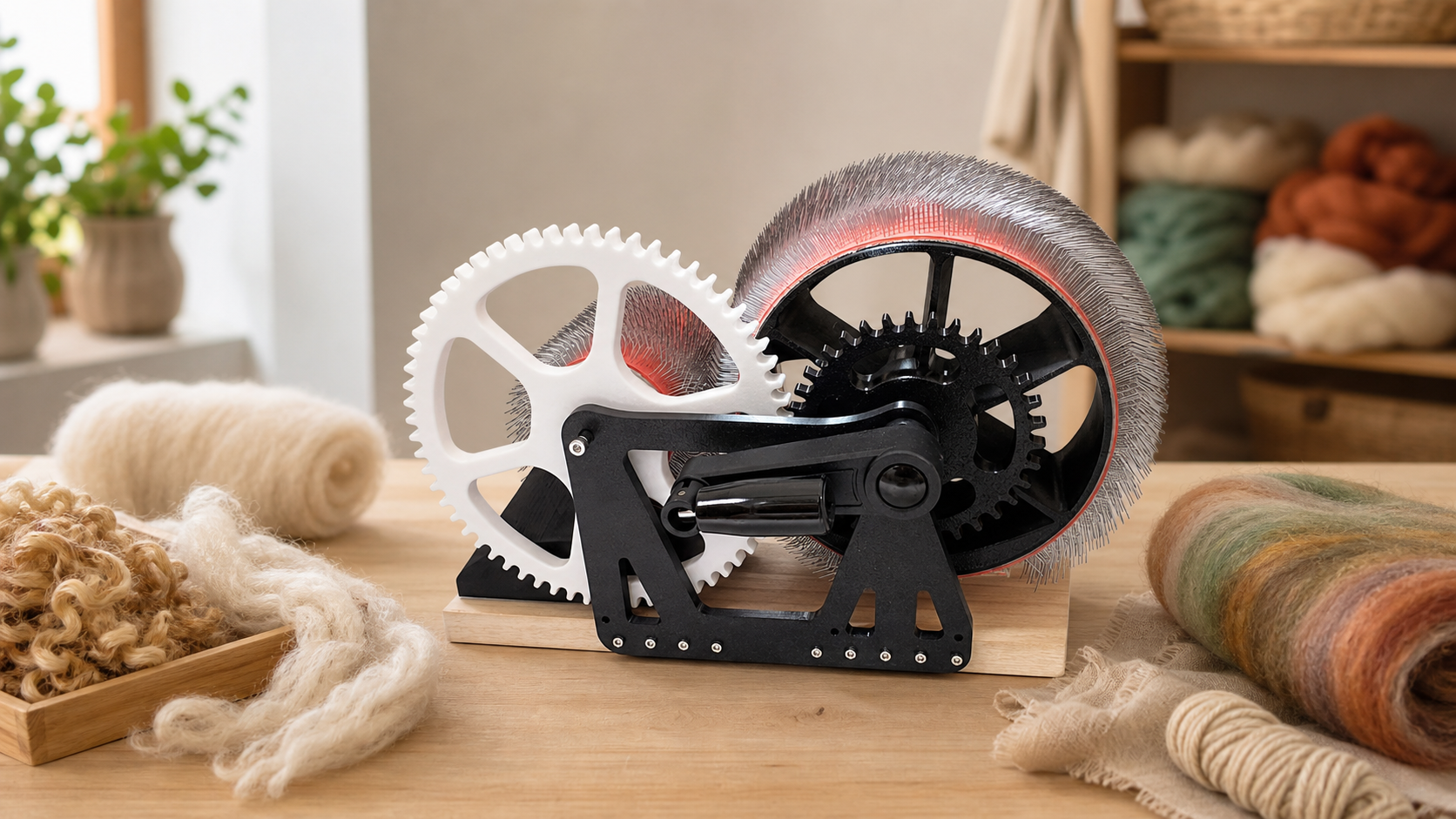
Many fiber artists search for how to make roving with a drum carder because they want something easier to spin than a wide batt. That is a reasonable goal, as long as the tool is used for what it does well. A drum carder opens and layers fiber into a batt. From there, you can divide and draft the batt into strips that behave more like roving for spinning, sampling, or teaching.
If you are new to drum carding, read the first batt routine before trying roving-style prep. Then compare the method with the current details on the DrumCarder Studio Fiber Carder.
Set The Right Expectation First
Roving, top, sliver, and batt are not the same preparation. Commercial roving is usually a continuous strand made through a different process. Combed top has fibers aligned in a more parallel way. A batt from a drum carder is a sheet of opened fiber. It can be smooth, lofty, textured, blended, or striped, but it begins as a batt.
That difference matters because it keeps the method honest. If you need a perfectly continuous, highly aligned preparation, another tool or purchased top may fit better. If you want a flexible hand-prep that pulls into strips and drafts comfortably, a drum-carded batt can work well.
Start With A Batt That Wants To Draft
Roving-style prep begins with the batt. Feed the fiber lightly and evenly. Avoid heavy patches, lumps, and overworked layers. A batt that is too dense will split into stubborn bands. A batt that is too thin may pull apart before you can draft it. Aim for a balanced sheet that holds together but still feels open.
For wool, this usually means opening the fiber first and feeding it across the width of the drum. For alpaca or fine wool, use even lighter feeding so the batt does not compact. If you are blending colors, decide whether you want lengthwise stripes, soft heathering, or a more uniform strip before you begin carding.
Remove The Batt In One Gentle Sheet
Roving-style drafting is easier when the batt comes off cleanly. Lift the batt without crushing it, then lay it flat on a clean surface. If the batt tears, do not panic. Smaller sections can still become useful strips. The important part is to avoid rolling or pressing the batt tightly before you divide it.
Look at the direction of the fiber and the way the colors sit in the batt. If you split the batt one way, you may get long color repeats. If you split it another way, you may get shorter color changes. This is one reason hand-prepared strips are interesting: the dividing choice can change the spinning experience.
Split The Batt Into Narrow Bands
Use your hands to divide the batt into bands that are comfortable to draft. For a thicker yarn, the bands can be wider. For finer spinning, make narrower bands and pre-draft carefully. Do not yank the batt apart. Pull gently along the length of the strip and let the fibers separate.
If a band resists, it may be too wide, too dense, or unevenly carded. Split it again or open the tight spot with your fingers. If a band falls apart, set the pieces aside and use them for shorter drafting sections. The goal is usable prep, not a perfect factory strand.
Draft For Air, Not Just Length
When you pull the strip, do not focus only on making it longer. Focus on keeping the fiber open. Short, gentle drafts help the strip lengthen without becoming thin in one place and bulky in another. If you are preparing for spinning, test a small section at the wheel or spindle before drafting the whole batch.
Some makers like to draft the strip only slightly and let the final drafting happen during spinning. Others prefer a more prepared strip so the spinning session feels smoother. Both methods can work. The right choice depends on the fiber, the yarn style, and how much control you want during spinning.
Choose Fiber That Suits Roving-Style Prep
Medium wool is often forgiving for this method because it can hold together while still drafting. Fine merino can work, but it needs light feeding and careful handling so it does not become compact. Alpaca can work when blended or handled gently, but it may need more support if it is slippery. Textured art batts can be pulled into strips, though the result may be intentionally uneven.
If the fiber has lots of short cuts, heavy vegetable matter, or matted sections, roving-style strips may be frustrating. Improve the fiber preparation before carding or choose a different end use for that batch.
Keep Notes For Repeatable Results
Roving-style prep is sensitive to small choices. Note the fiber, feed amount, pass count, batt thickness, strip width, and how much you drafted before spinning. If you like the result, those notes help you repeat it. If you do not like it, they show what to change next time.
If you have product questions before choosing a carder for this kind of prep, use the contact page. Ask about the current product details that affect your bench setup, fiber prep style, and cleanup routine.
Make Batts That Draft Into Better Strips
Review the DrumCarder Studio Fiber Carder for small-batch batts, wool prep, alpaca blending, and roving-style hand preparation.
FAQ
Does a drum carder make true roving?
A drum carder makes batts. You can split and draft those batts into roving-style strips, but the result is different from commercial roving or combed top.
What batt thickness works best for roving-style strips?
Use a batt that is even, open, and sturdy enough to split. If it is too dense, it will resist drafting. If it is too thin, it may fall apart too quickly.
Can I use a diz with a drum-carded batt?
Some makers use a diz or similar pulling approach with prepared batts, but it depends on the fiber and the batt. Test a small section first and do not force dense fiber through a small opening.
Is roving-style prep good for beginners?
It can be helpful because narrow strips are often easier to manage than a full batt. Beginners should start with a simple wool batt and make small samples before preparing a full batch.