
Blog
Merino Wool on a Drum Carder: Fine Fiber Handling
Jul
Quick answer: merino wool needs thin feeding, careful pass control, and a willingness to stop before the batt becomes dense. A drum carder can help open and blend fine wool, but merino is easy to overpack because the fibers are soft, fine, and eager to cling together. Treat it as a fine fiber, not as a bulky fleece that needs force.
Merino is popular because it can spin into soft yarn and felt into a smooth surface, but those same qualities can make carding tricky. Fine wool can look tidy on the drum while quietly building into a heavy sheet. If you feed too much, add too many passes, or press the batt during removal, the preparation may draft unevenly even though it looks neat.
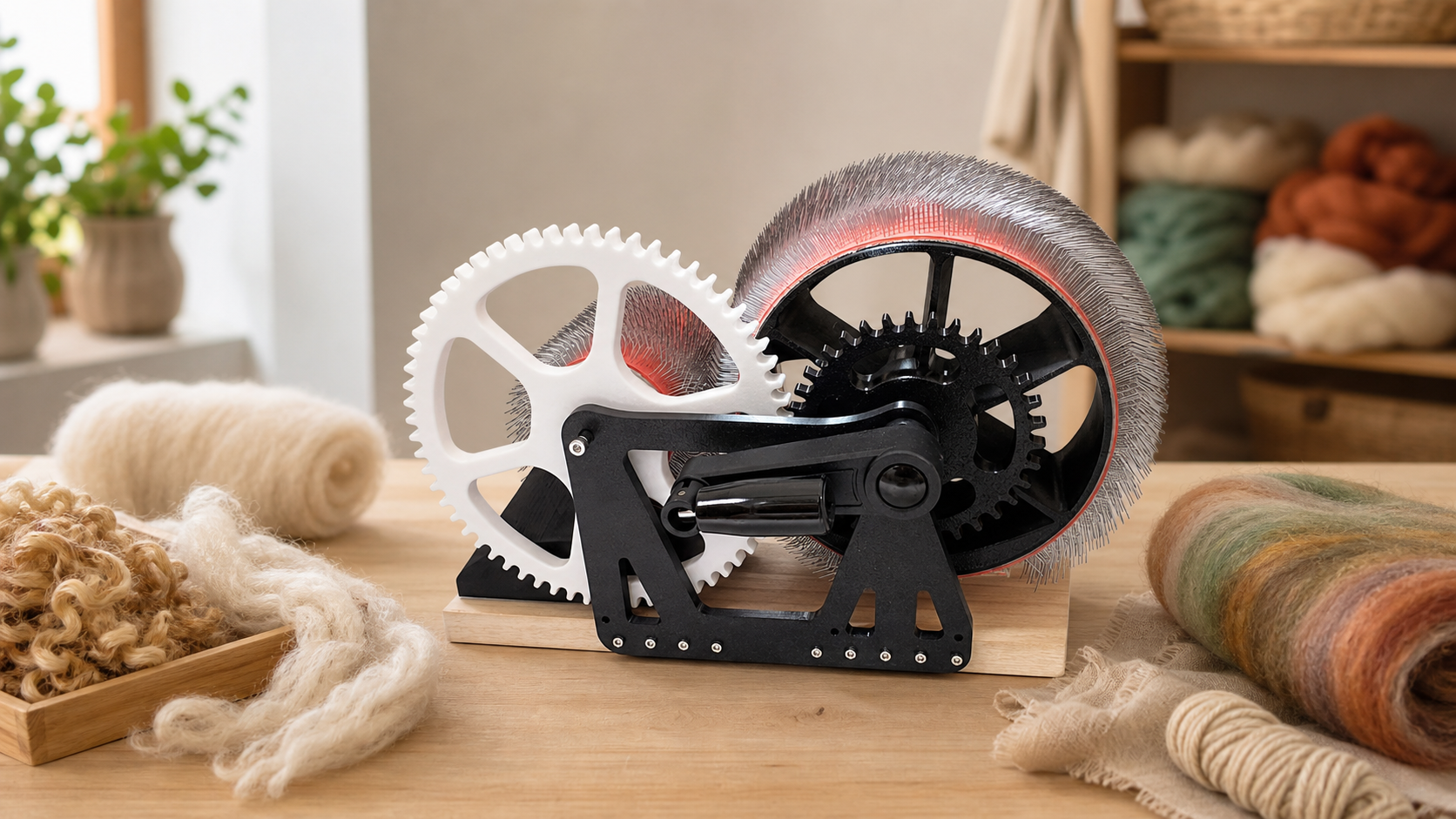
This guide gives a merino-specific method for small fiber studios. If you need a more general wool routine first, start with how to card wool with a drum carder, then return here for finer handling notes. For current product details, review the DrumCarder Studio Fiber Carder.
Understand Why Fine Wool Packs So Easily
Merino has a fine hand and can hold together in a dense mass when too much is fed at once. The carder may still turn, but the batt can become compressed. A compact batt is not always a problem for every use, yet it can make spinning feel harder because the fibers do not draft freely.
The solution is not speed. It is small amounts, even placement, and regular checks. The goal is to let the carding cloth open the fiber without making it fight through a crowded feed area. A light layer that looks almost too thin is often the right starting point for merino.
Open The Merino Before Feeding
If the merino is in top, roving, washed fleece, or a previous batt, open it before carding. Pull the fiber into airy pieces rather than feeding a thick strip directly from the bundle. If there are neps, vegetable matter, or compacted areas, remove what you can before the fiber reaches the drum.
Fine wool magnifies preparation mistakes. A clump that would be minor in a coarser batt can become a stubborn spot in merino. Take a moment to loosen the fiber with your fingers and spread it across the width of the feed area. This small step often matters more than another pass later.
Use Thin Layers Rather Than A Heavy First Pass
For merino, a heavy first pass can create a batt that looks full but feels reluctant. Feed a light layer, let it catch, then add another light layer. Move across the width of the carder so the fiber does not build a ridge in one spot. If you are blending colors, keep the first pass organized rather than trying to solve everything at once.
Watch for the moment when the drum surface looks evenly covered. You do not need to pack the entire drum as tightly as possible. A thinner batt can be easier to remove, easier to split, and easier to draft. If you need more fiber, make another batt instead of forcing one batt to hold too much.
Control Pass Count For The Intended Fiber
Merino often tempts people into extra passes because each pass makes the batt look smoother. Smooth is useful, but only to a point. Too many passes can blend color too far, increase compression, and make fine fibers feel tired. Stop after the batt meets the actual goal.
For spinning, test a small strip by drafting it. If it drafts evenly, another pass may not help. For felting, consider whether the batt is even enough for layout. For blending, compare the color after each pass. More uniform is not automatically better if you wanted life and movement in the finished fiber.
Blend Merino With Structure In Mind
Merino blends beautifully with other fibers, but fine wool can swallow delicate accents when the blend is overworked. Add silk, alpaca, locks, or sparkle in small amounts and decide whether you want those materials mixed throughout or visible near the surface. Place them deliberately rather than scattering everything at random.
If you blend merino with a stronger wool, the stronger wool can add bounce and grip. If you blend it with alpaca, the preparation may become softer and more drapey. If you add textured locks, keep pass count low so the texture is not hidden. The carder gives you a way to organize the blend, but the recipe should still have a purpose.
Remove And Store Fine Wool Carefully
When the batt is ready, lift it gently and avoid squeezing it into a tight roll. Fine wool can flatten in storage if it is packed under weight. If you are saving batts for later, keep them loose, dry, and protected. Labeling small samples can also help you remember feed amount, pass count, and blend choices.
If the batt feels dense, do not blame the fiber immediately. Make a smaller sample with lighter feeding and fewer passes. Merino can feel completely different when the carding session gives it more space.
Use Product Questions To Match Your Studio
If fine wool is your main fiber, compare your intended routine with the product page rather than assuming every carder behaves the same. Ask about details that affect your bench routine, cleaning access, and fiber prep habits. Use the contact page if a current product detail is not clear.
Prepare Merino With Better Feed Control
Review the DrumCarder Studio Fiber Carder for fine wool, wool blends, alpaca, and art batt preparation.
FAQ
Can merino be carded on a drum carder?
Yes, merino can be carded on a drum carder when it is opened first and fed in thin layers. The main risk is compression from overfeeding or too many passes.
How do I avoid neps in merino batts?
Start with clean, well-prepared fiber, remove problem bits before carding, and avoid forcing compacted clumps through the feed area. Extra passes do not always fix neps.
Should merino need more passes because it is fine?
Not necessarily. Fine fiber often needs fewer, gentler passes. Use drafting or layout tests to decide whether another pass improves the batt or only makes it denser.
Can I blend merino with alpaca or silk?
Yes. Blend in small layers and sample first. Alpaca can add softness and drape, while silk can add shine, but both can change how the batt drafts and handles.