
Blog
Drum Carder Care Checklist for Long-Term Use
Jul
Quick answer: long-term drum carder care is mostly steady habit: feed prepared fiber, avoid forcing hard turns, clean gently between projects, keep the work area dry and clear, store the tool responsibly, and write down anything that changes. Care is easier when it happens after every session instead of after a problem appears.
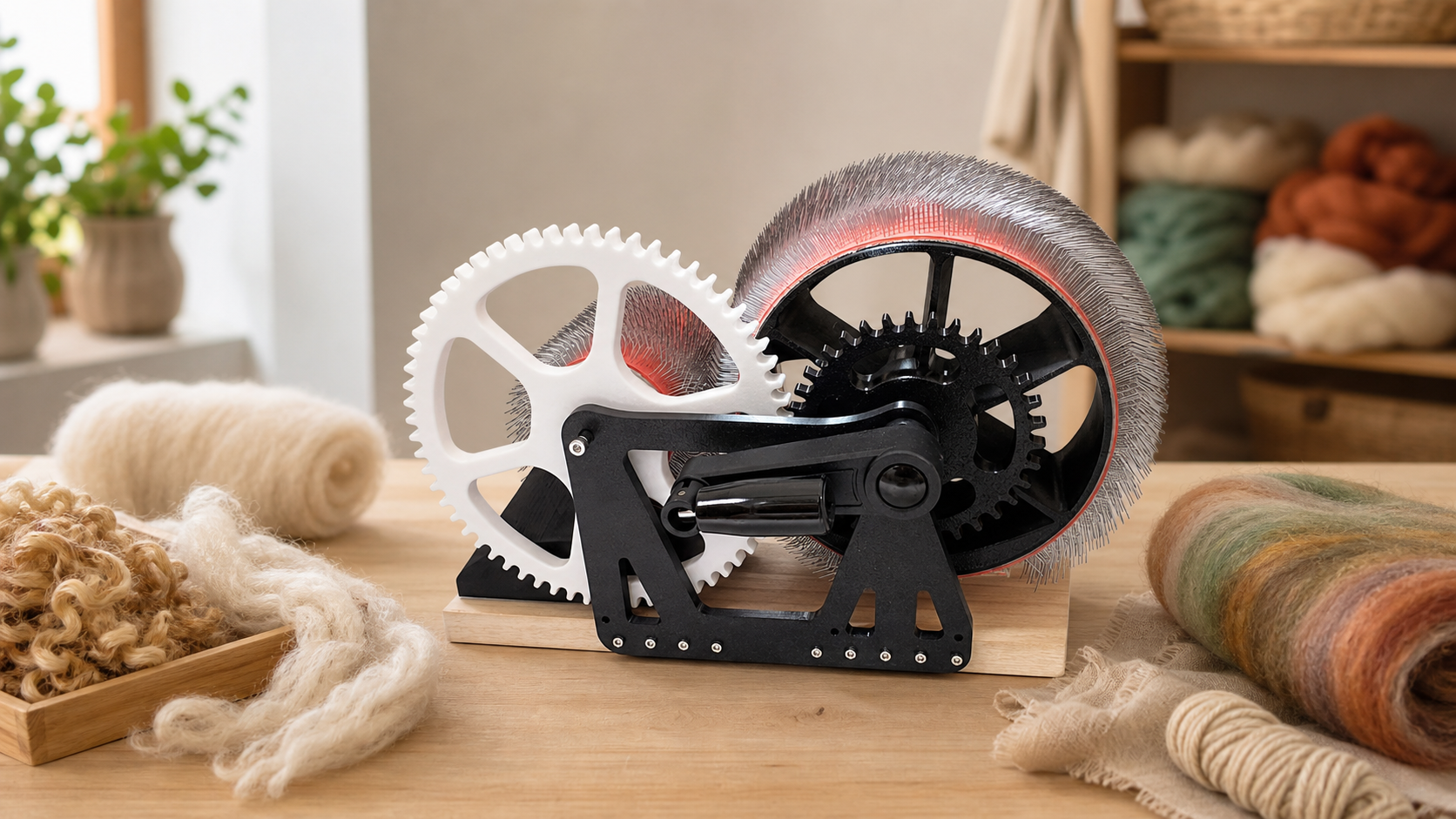
A drum carder is a working studio tool. It will see wool, alpaca, dyed fiber, locks, texture, dust, and busy hands. Long-term care does not have to be complicated, but it does need to be regular. The maker who cleans and observes after each session usually notices small changes before they become frustrating.
Protect The Tool During Use
The best care starts while carding. Feed fiber that is clean, dry, and opened. Do not ask the carder to fight dense clumps, damp fiber, or debris. If the handle or working motion feels harder than usual, stop and inspect. Forcing a session is the opposite of care.
Light feeding also creates better batts. The guide to smoother wool batts explains how preparation before feeding affects both the fiber and the tool experience.
Clean Between Color Families
Cleaning after every single tiny test may not need to be elaborate, but color families deserve a reset. Dark wool before white wool, sparkle before natural fiber, or alpaca before a smooth wool batt can create carryover. Remove loose fiber gently and inspect before starting the next blend.
Keep cleaning tools close to the carding station and use methods that suit the product. Avoid rough or improvised tools unless you know they are appropriate. Care should preserve the working surface, not scratch or stress it.
Make cleanup part of the project, not an afterthought. If you stop while you still have a little patience, you are more likely to reset the table correctly. Waiting until you are tired often leads to loose fiber left behind for the next session.
Store The Carder Like A Studio Tool
Storage matters in shared homes and small studios. Keep the carder away from moisture, food, heavy objects, and curious hands. If the workbench doubles as another table, cover or move the carder between sessions. Do not let loose fiber hang from the working area after use.
Good storage also protects your rhythm. When the carder is clean, visible, and easy to access, you are more likely to use it properly. When it is buried under supplies, the next session starts with friction.
If you store fiber nearby, separate loose fiber from the tool. Bags, bins, or lidded boxes reduce dust and color transfer. A clean storage habit means setup starts with choosing fiber, not clearing yesterday’s leftovers.
Keep A Simple Care Log
A care log can be only a few lines: date, project, fiber type, cleaning done, and anything unusual. If the tool ever feels different, those notes help you remember whether the change followed a particular fiber, storage situation, or session.
For studios that sell batts or teach, care notes are part of quality control. They show that the prep process is repeatable and that color carryover is being managed intentionally.
Do not make the log so detailed that you avoid using it. A short note written every time is better than a perfect form filled out once. The care habit should feel like closing the session, not starting a paperwork task.
Pair Care With Safe Habits
Long-term care and safety overlap. A clear bench, tied hair, secured sleeves, and slow feeding protect both the maker and the tool. If the table is crowded, the chance of forcing, snagging, or dropping something into the fiber path increases.
Read the guide to home studio drum carder safety if your carder shares space with family rooms, craft tables, or teaching sessions.
Safety checks also reveal care issues. A wobbly table, poor light, loose tools, or rushed cleanup can all affect how the carder is handled. Fix the room before blaming the fiber.
When the room feels orderly, careful handling becomes much easier. That calm is part of maintenance, even though it does not look like a repair task.
Order protects attention. Always.
Review Store Information Before Questions
If you are choosing a carder or planning long-term use, start with the DrumCarder homepage and the Studio Drum Carder product page. For buying details, review the shipping policy and refund and returns policy.
If something changes during use and you are not sure how to handle it, use the contact page. Describe the fiber, the session, the care steps already taken, and what feels different.
Long-term care is easiest when it is tied to closing the session. Clear the table, note the fiber, protect the carder, and store the next project separately before the room returns to normal household use.
Plan For Long-Term Fiber Prep
Review the Studio Drum Carder for a small-studio carding routine you can clean, store, and use consistently over time.
FAQ
How often should I clean a drum carder?
Clean gently after sessions and especially between strong color families, sparkle, alpaca, or any project that could carry into the next batt.
What is the most important long-term care habit?
Do not force the tool. If fiber resists or the motion changes, stop, inspect, and adjust the fiber preparation before continuing.
Can poor fiber preparation affect care?
Yes. Damp, dirty, clumped, or matted fiber can make the carding session harder and increase cleanup. Prepared fiber is easier on both the tool and the maker.
Should I keep a care log?
Yes, even a short one. Dates, fiber types, cleaning notes, and unusual observations help you spot patterns over time.
How should I store the carder?
Store it clean, dry, protected from heavy objects, and away from curious hands in shared spaces. Keep loose fiber off the working area after use.