
Blog
How to Make Fiber Prep More Repeatable
Jul
Quick answer: to make fiber prep more repeatable, standardize the parts you can control: fiber amount, opening method, feed order, pass count, color notes, table setup, and cleanup. Repeatability does not mean every batt becomes identical. It means the next session starts from known choices instead of memory and guesswork.
Many makers remember a beautiful batt but cannot rebuild it. The fiber was pulled from several bags, the color order changed halfway through, and the number of passes was “about two.” A drum carder can make fiber prep more repeatable, but only if the studio routine captures what happened.
Choose One Repeatable Unit
Start by defining one unit of work. It might be one small batt, one class sample, one animal-body blend, one scarf section, or one shop batt. A repeatable unit gives your notes a shape. Instead of writing vague comments, you can record what went into that specific result.
If the unit is too large, mistakes become hard to trace. If it is too small, you may spend more time recording than carding. Choose the size that matches how you actually use the fiber.
For personal projects, the repeatable unit may be “one batt for one evening of spinning.” For teaching, it may be “one sample per student.” For selling, it may be “one photographed batt with a matching label.” Naming the unit makes every later decision easier.
Prepare Fiber The Same Way Each Time
Repeatability begins before the carder. Tease or open fiber consistently. Remove obvious debris. Keep damp, matted, or packed fiber out of the feed area until it is prepared. If one session starts with airy fiber and another starts with tight clumps, the results will not match even if the colors are the same.
For a basic process check, the guide to carding wool into smoother batts is a good foundation. The same light feeding habits support repeatability.
Consistency does not require expensive tools. It can be as simple as opening each handful the same way, placing colors in the same order, and stopping to inspect at the same points. Small repeated habits add up faster than a complicated tracking system.
Record Feed Order And Pass Count
Feed order matters. A blue accent added early blends differently from the same blue added late. A second pass softens color more than one pass. Write down the sequence in plain words: base first, bridge color second, accent late, one pass only. This is enough to rebuild the logic next time.
Do not rely on memory for pass count. When several batts are on the table, the sessions blur together. Keep a small notebook, index card, or label beside the work area and mark each batt as soon as it comes off the drum.
Use the same words every time. If one page says “accent late” and another says “top color at the end,” you may understand it today but hesitate later. Consistent language keeps the method clear when you return weeks afterward.
Make A Repeat Sheet
A repeat sheet can be simple:
- Project or batt name
- Fiber types and rough amounts
- Color order
- Pass count
- What changed after carding
- What to adjust next time
Photograph the starting piles and the finished batt. Photos catch color placement and texture better than words alone. If you sell batts or teach, the repeat sheet becomes a quiet studio asset.
Control Cleanup Between Batches
Repeatability also depends on what is left behind. Dark fiber, sparkle, alpaca, or bright accents can carry into the next batt if the carder is not reset. Clean gently between color families and inspect the table before starting a pale or natural blend.
If long-term care is becoming part of your routine, the guide to drum carder care for long-term use can help you think beyond one session.
Cleanup notes can be simple: dark fiber cleared, table reset, pale blend next. That tiny record helps explain why one batch stayed clean and another picked up stray color.
It also reminds you to slow down when moving from dramatic color to pale natural fiber. Repeatability improves when transitions between batches are managed, not rushed.
Use Repeatability To Decide What To Buy
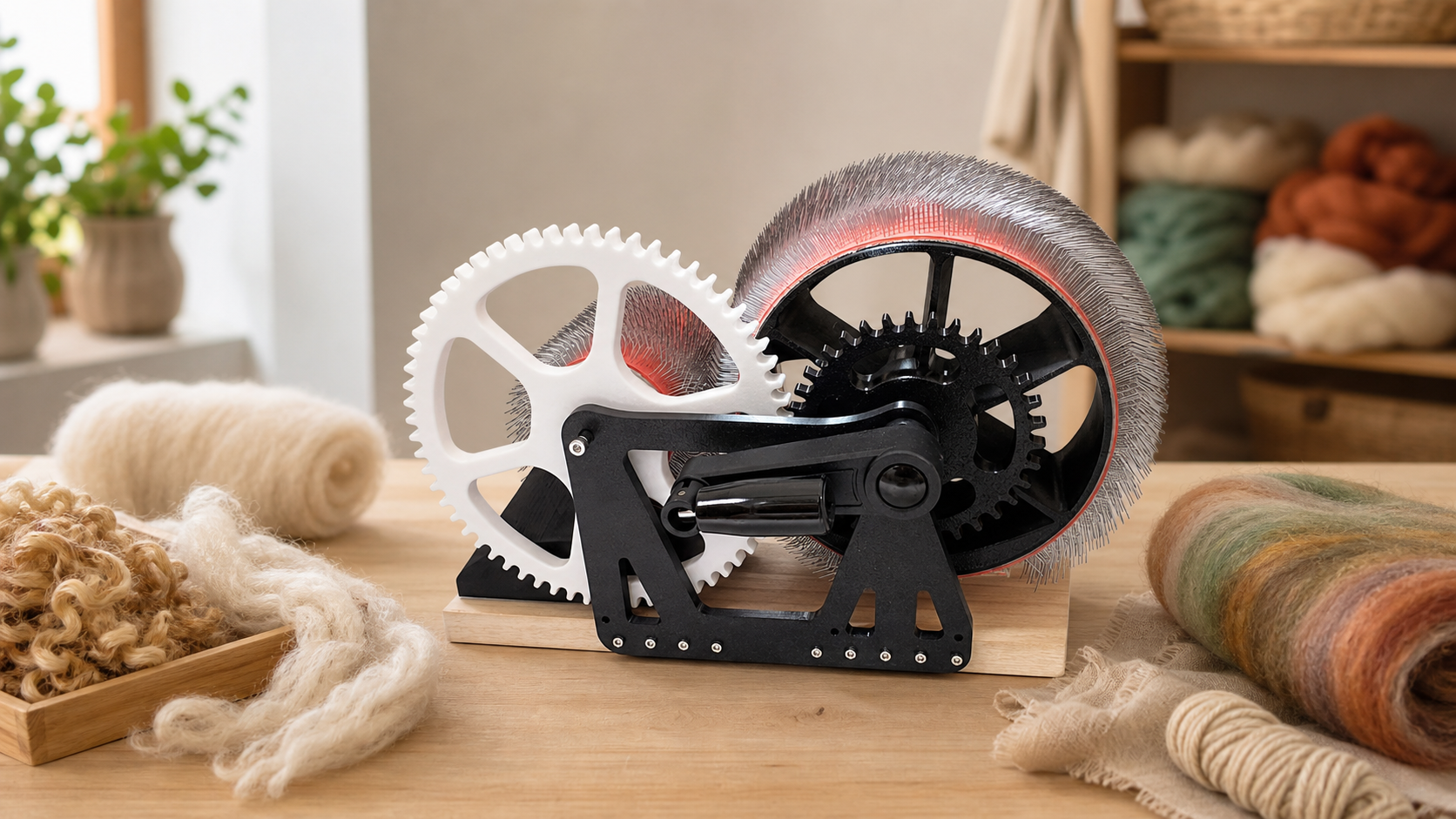
If repeatable small-batch prep is a real need in your studio, review the Studio Drum Carder and compare it with your normal fiber unit, workspace, and storage habits. The DrumCarder homepage gives the main product route.
Before ordering, read the shipping policy and refund and returns policy. Use the contact page if you have questions about setup or product fit.
Repeatability should feel helpful, not restrictive. Leave room for creative changes, but record the change clearly so you know whether the improvement came from the fiber, the feed order, or the finishing step.
Make Your Fiber Prep Easier To Repeat
Review the Studio Drum Carder for small-batch wool, alpaca, color sampling, and studio routines where notes and repeatability matter.
FAQ
What is the easiest way to make fiber prep repeatable?
Use the same fiber unit, open fiber consistently, record feed order, and write down pass count immediately after each batt.
Do I need a scale for repeatable batts?
A scale helps, but visual portions can work for informal studio use. The most important habit is recording the method the same way each time.
Why do my repeated blends still look different?
Fiber opening, feed order, pass count, color strength, and cleanup can all change the result. Compare the notes and adjust one variable at a time.
Should repeatable prep remove all variation?
No. Handmade fiber can keep natural variation. Repeatability means the handling and color logic are consistent enough to make related results.
What should sellers record?
Record fiber type, colors, rough proportions, pass count, batt weight if used, and photos. Those notes help with related batches and honest product descriptions.