
Blog
How to Choose Between More Batts and Better Batts
Jul
Quick answer: choose more batts when you need volume, class materials, shop inventory, or repeated neutral prep. Choose better batts when color control, smooth drafting, visible texture, or project quality matters more than speed. A drum carder helps most when it supports the right goal for the session, not when every session becomes a race.
Fiber prep has a quiet pressure problem. Once a carder is on the table, it is tempting to measure success by the size of the finished stack. But a large stack of uneven batts can create more work later. At the same time, polishing every batt forever can slow a studio to a crawl. The real decision is not volume versus quality forever. It is which one matters today.
Choose More Batts When The Job Is Repetition
More batts make sense when the fiber job is simple and repeated. You may be preparing core wool, class samples, neutral bases, packaging inserts, or early blending tests. In those cases, the batts should be usable and consistent, but they do not need complex color placement.
Set a clear standard: clean fiber, light feeding, no major lumps, and easy pulling. Once a batt meets that standard, move on. This protects your time and keeps the studio productive without pretending every batt is a showpiece.
Batching similar prep together also reduces setup friction. If the table, fiber, and notes are already arranged for neutral batts, finish that group before switching to detailed color work.
Switching too often burns attention.
Choose Better Batts When The Batt Carries The Design
Better batts matter when the batt itself controls the final result. Ombre batts, art batts, spinning batts with visible color movement, and wet felting layers all deserve more inspection. Here, a rushed stack can create streaks, muddy color, or dense spots that show up later.
If color is the main feature, read the guide to making ombre batts on a drum carder. If smooth handling is the goal, use the guide to smoother wool batts. Better batts usually come from fewer, more thoughtful decisions.
Use A Session Goal Before You Start
Write one sentence before the session: “Today I need six plain core batts,” or “Today I need two color-controlled scarf batts.” That sentence changes how you feed fiber, when you stop, and how much time you spend on inspection.
Without a session goal, makers often mix priorities. They try to produce quickly while also demanding perfect color. That creates frustration. Give each session one main job and judge the batts by that job.
A session goal also protects limited studio energy. If you only have one hour, a small stack of simple batts may be more satisfying than starting a complex blend you cannot finish well. If you have a quiet afternoon, one excellent color study may be worth more than ten rushed sheets.
Make A Simple Decision Table
| Session Type | Better Priority | More Priority |
|---|---|---|
| Core wool prep | Even pulling | Batch quantity |
| Ombre color work | Gradient control | Small samples first |
| Class materials | Consistent handling | Enough pieces for everyone |
| Shop batts | Photo honesty and repeatability | Inventory rhythm |
A table like this keeps you honest. Volume is not bad. Quality is not precious. Both are useful when the session asks for them.
Let The Product Fit The Workload
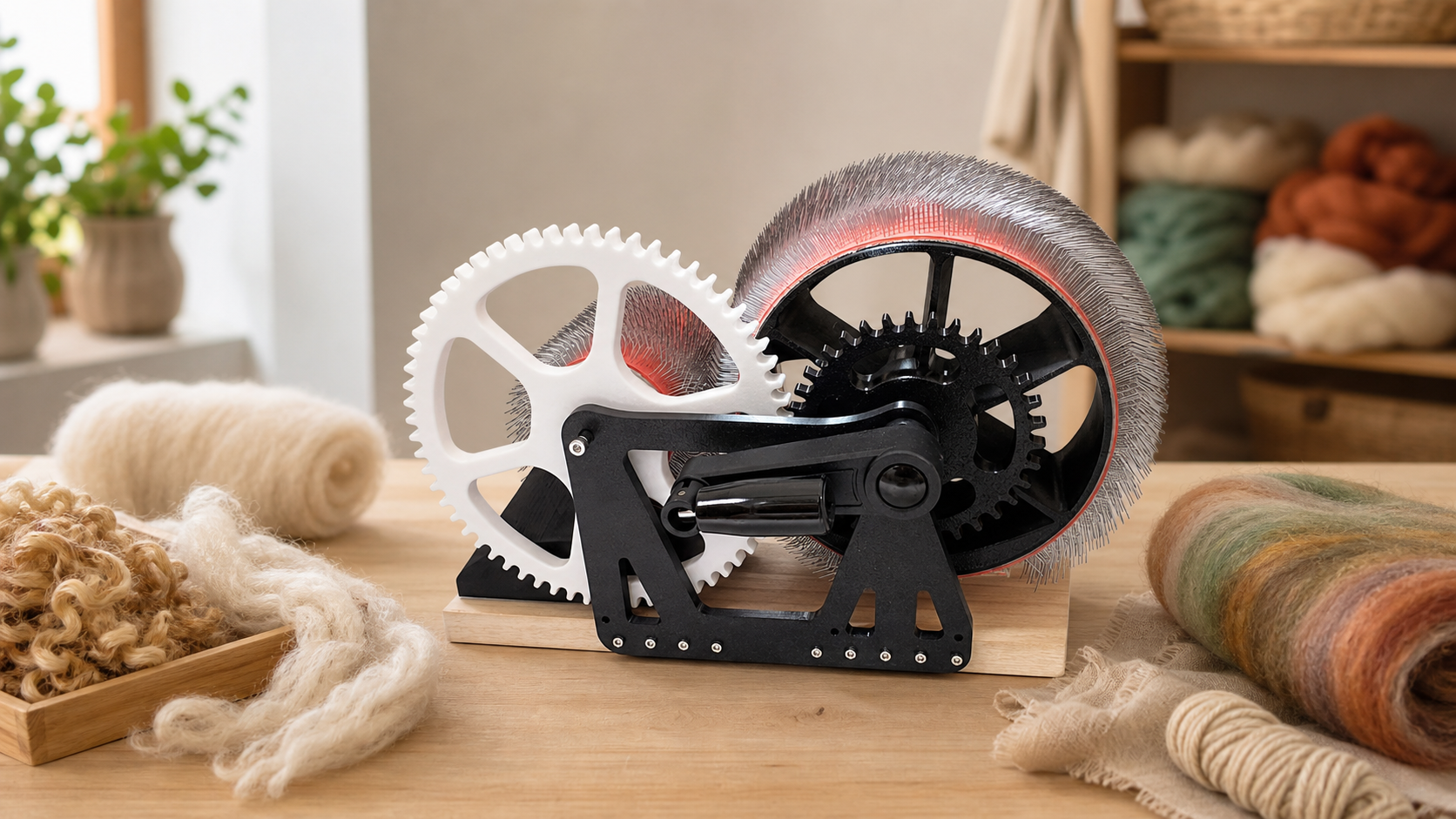
The Studio Drum Carder is worth reviewing if your fiber work is small-batch, repeatable, and focused on wool, alpaca, art batts, and sample prep. Start with the DrumCarder homepage to understand the product path, then compare the tool with the way your studio actually works.
Before buying, review the shipping policy and refund and returns policy. If you are unsure whether your goal is volume, quality, or both, use the contact page and describe your normal projects.
Build A Rhythm That Can Change
Some weeks are production weeks. Some weeks are sample weeks. Some weeks are learning weeks. Let your carding routine change with the work instead of locking yourself into one standard. A neutral core batch can be fast. A color study can be slow. A shop batch can sit in the middle: efficient, but still carefully recorded.
The best studio rhythm is not the fastest one. It is the rhythm that leaves you with fiber you are happy to use.
If you feel stuck, split the session in half. Spend the first half making usable batts and the second half improving one detail, such as edge softness, color order, or batt removal. That gives you progress without turning the whole session into a quality test.
Choose The Right Carding Rhythm
Review the Studio Drum Carder for small-batch fiber prep that can support both repeatable volume and careful batt quality.
FAQ
Is it bad to focus on making more batts?
No. Volume is useful for simple, repeated prep. The problem is chasing volume during a session that needs color control or careful texture.
When should I slow down for better batts?
Slow down when the batt affects the final appearance, drafting, felting layout, shop photos, or repeatability of a special blend.
How do I know if a plain batt is good enough?
It should be clean, easy to pull, free of major lumps, and suitable for its purpose. It does not need decorative perfection.
Can I improve both speed and quality?
Yes, over time. Notes, prepared fiber piles, clear session goals, and light feeding improve both. Just do not expect both to peak in every session.
What should small sellers prioritize?
Prioritize repeatability and honest presentation. A shop batt should look good, handle well, and be possible to make in related batches later.