
Blog
How Many Passes Should a Drum Carder Batt Need
Jul
Quick answer: most drum carder batts need one or two passes. One pass keeps color, locks, and texture more visible. Two light passes make many spinning and felting batts smoother. A third pass should only happen when you can name the exact problem it will solve, because extra carding can flatten texture, mute color, and make fiber feel compact.
Pass count is not a trophy number. It is a stopping decision. A good batt is done when it works for the project, not when it has gone through the carder as many times as possible. The practical question is simple: what should this batt do when you spin, felt, sample, photograph, or sell it?
The Three-Question Pass Test
After every pass, ask three questions. Does the batt draft or handle the way the project needs? Does the color still have the movement you wanted? Does the fiber feel open rather than packed? If the answer is yes, stop. If one answer is no, decide whether another full pass is the best repair.
Many makers skip this pause and keep carding because the batt could be a little smoother. That habit creates dull batts. Inspection is part of the process. Remove the batt, lift it gently, draft a small strip, and look at the color from a distance before you feed it again.
One Pass: Best For Texture And Sampling
Choose one pass when the fiber is already open and the design depends on visible texture. Locks, sparkle, nepps, and bold color placement often look better with restraint. A single pass can also be perfect for testing a new fiber mix because it shows you how the materials behave without hiding every clue.
The risk is unevenness. If the fiber entered as clumps, the batt may have dense spots. If the accent color entered as one strip, the stripe may stay strong. That is not automatically wrong. It is only wrong if the batt will not draft, felt, or photograph the way you need.
Two Passes: The Practical Default
Two light passes are a sensible default for many wool and wool-alpaca batts. The first pass builds the batt. The second pass redistributes dense areas and blends color more evenly. The key is to split the first batt into strips before the second pass instead of pushing a thick roll back through the feed area.
Alternate thicker and thinner strips. Place loud color between quieter strips. Feed slowly and watch the drum surface rebuild. If the second pass gives you a loftier, smoother batt while the color still feels alive, the session is probably finished. The guide on how to card wool into smoother batts can help with that feeding rhythm.
Three Passes: Use Only For A Named Problem
A third pass is useful when you can point to a specific issue: one dense section, uneven distribution, or a blend that still needs stronger integration. It is not useful when the batt is already good and you are chasing perfection. Perfection often removes the very texture that made the batt interesting.
Before a third pass, consider a partial repair. Pull apart the dense strip and feed only that section with a little more base fiber. If a color is too loud, dilute the loud section rather than recarding everything. Full-batt recarding should be deliberate, especially for fine fiber or decorative ingredients.
Let Fiber Type And End Use Decide
Open wool usually tolerates a second light pass well. Alpaca can become dense when fed heavily, so inspect it sooner. Long locks may lose character after repeated carding. Shiny add-ins can disappear quickly. The batt’s purpose matters just as much as the fiber. Spinning batts need easy drafting. Felting batts need even coverage. Art batts may need visible drama.
If you plan to make several similar batts, keep a pass log. Write down fiber type, color order, amount, pass count, and result. A small note can save a whole afternoon later. Repetition is easier when you know whether the successful batt was one pass, two passes, or a selective repair after the second pass.
Use A Studio Setup That Makes Pausing Easy
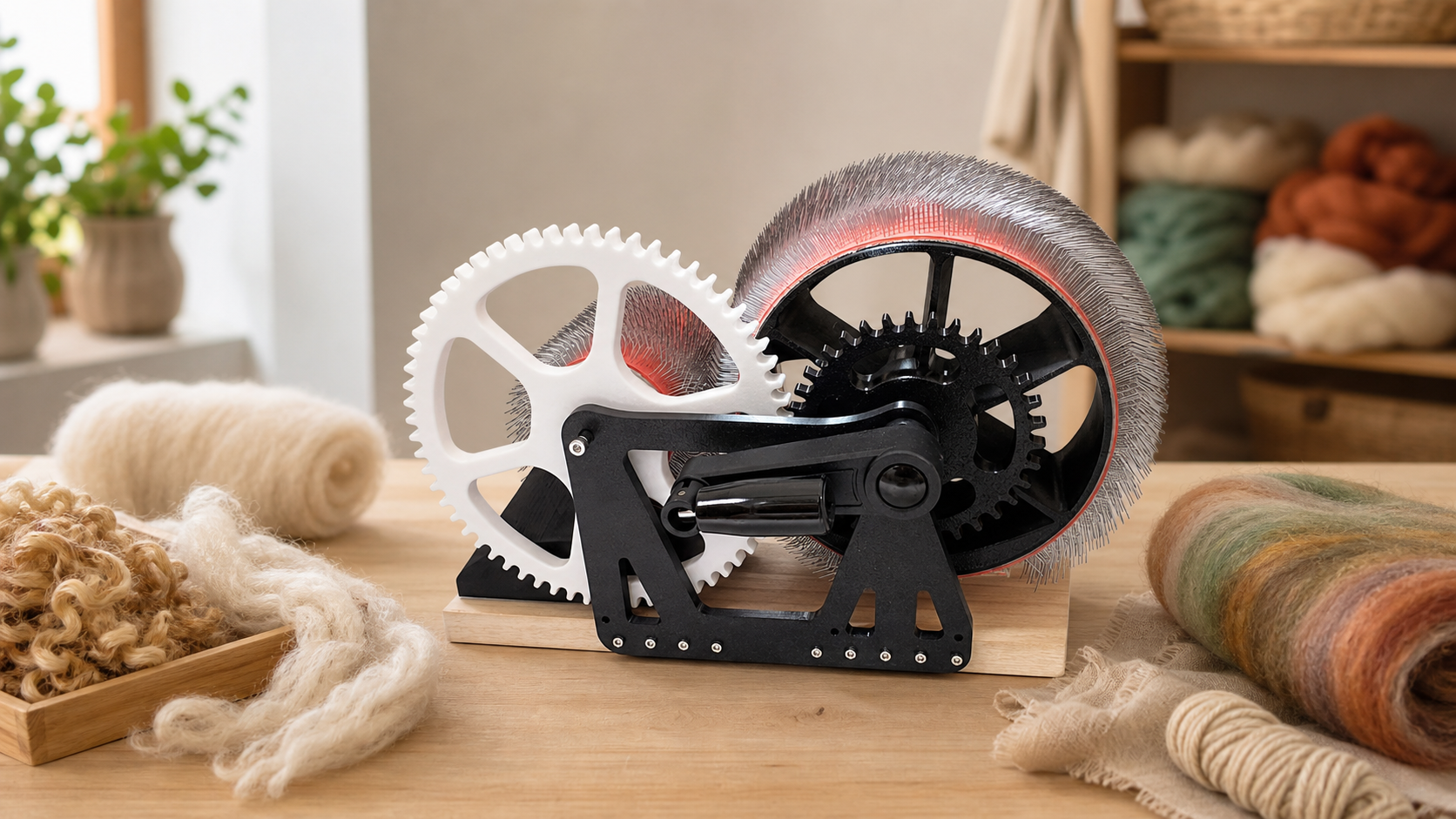
The Studio Drum Carder fits best into a small-batch routine where you can feed, remove, inspect, and adjust without rushing. Keep your table clear enough to lay the batt flat between passes. Keep notes nearby. Treat stopping as a normal step, not an interruption.
You can review the DrumCarder homepage for the product path and use the contact page for setup questions. If you ask for help, include the fiber type, number of passes, and what changed after each pass.
Build A Repeatable Carding Rhythm
Review the Studio Drum Carder for small-batch wool, alpaca, art batt, and dye-sample prep where pass count matters.
FAQ
Is one pass enough for a drum carder batt?
Often, yes. One pass is enough when the fiber is already open and the project benefits from visible texture, color separation, or quick sampling.
When should I use two passes?
Use two light passes when the first batt has uneven density, mild clumps, or color that needs gentle integration. Split the batt into strips before feeding it again.
Can too many passes hurt the batt?
Yes. Extra passes can compact fiber, mute color, flatten locks, and make shiny accents disappear. Stop when the batt serves the project.
Should alpaca get fewer passes than wool?
It often needs a lighter touch. Alpaca can feel dense if packed or overworked, so test a small amount and inspect the batt before adding another pass.
How do I track pass count for repeat blends?
Use a notebook or product tag. Record fiber type, colors, rough amounts, feed order, pass count, and any partial repair. The notes help you repeat the handling, not just the palette.