
Blog
How to Fix Streaky Color in Carded Batts
Jul
Quick answer: to fix streaky color in carded batts, stop treating the batt as one big mistake. First decide whether the streak is a hard stripe, a muddy drag, a pale gap, or an accent that only looks too loud. Then repair the specific problem with thinner layers, a small amount of base fiber, one careful return pass, or a deliberate decision to leave the streak as part of the design.
Streaks usually appear when color enters the drum in one heavy strip or when the base fiber is uneven before carding begins. More passes can help, but only when they solve the right problem. Random recarding often turns a lively batt into a dull one. The better repair is slower, smaller, and more selective.
Sort The Streak Before You Touch The Batt
Lay the batt flat in natural light and look from a few feet away. A hard stripe looks like a road through the batt. A muddy drag looks like one color smeared through another. A pale gap means the base fiber never covered the drum evenly. A loud accent may look wrong on the table but spin or felt beautifully.
Once you name the type, the repair becomes clearer. A hard stripe needs dilution or redistribution. A muddy area needs stopping, not more blending. A pale gap needs a thin veil of base fiber. An accent may need better placement in the next batt rather than repair in this one.
Use A Small Repair Pass, Not A Panic Pass
If the batt has one strong color line, split the batt into narrow strips. Put the strongest strip between quieter strips. Feed those strips back in slowly, with the bold color broken into small moments across the width. Do not roll the whole batt into a dense rope and push it through. That is how a stripe becomes a lump.
Add a light veil of base fiber only where the color needs softening. White can brighten a color. Gray can calm it. A related shade can blend the edge without making the whole batt look flat. The goal is not to erase the color; it is to make the color look intentional.
Prevent Streaks At The Feed Tray
Most color trouble begins before the fiber reaches the drum. Pull dyed fiber into thin wisps. Spread color across the width instead of placing one dense ribbon in the center. If you want a visible stripe, make that choice on purpose and keep it light enough to draft later.
For heathered batts, alternate base fiber with small color wisps. For soft layers, build the batt in repeating passes of base, bridge color, and accent. For dramatic art batts, place accents late and use fewer passes so they stay visible. If you are working toward smoother utility batts, the guide to carding wool into smoother batts is a useful companion.
Build A Color Ladder For The Next Batt
A color ladder is a simple order: base, bridge, accent, rest, then inspect. The base gives the batt structure. The bridge color softens the jump between shades. The accent adds energy. Rest means you pause before adding more. That pause matters because a batt often looks different after the color settles on the drum.
Try making three small samples instead of one large rescue session. In the first sample, use one pass. In the second, use two light passes. In the third, add a small veil of base fiber before the second pass. Photograph the results. You will learn more from three small samples than from repeatedly carding one full batt past the point of usefulness.
Match The Repair To The Final Use
A spinning batt needs to draft without sudden dense spots. A felting batt needs coverage that behaves predictably across the layout. A display batt may need the streak to stay visible because the color story is part of the appeal. Repair only as much as the project requires.
Pull a small strip from the batt and draft it by hand. If the streak drafts into attractive color movement, the batt may already be done. If the streak feels rope-like or causes a hard pull, repair that section. If the colors have already turned muddy, stop carding and use the batt for a project where the softer blend still works.
Use DrumCarder As A Controlled Layering Tool
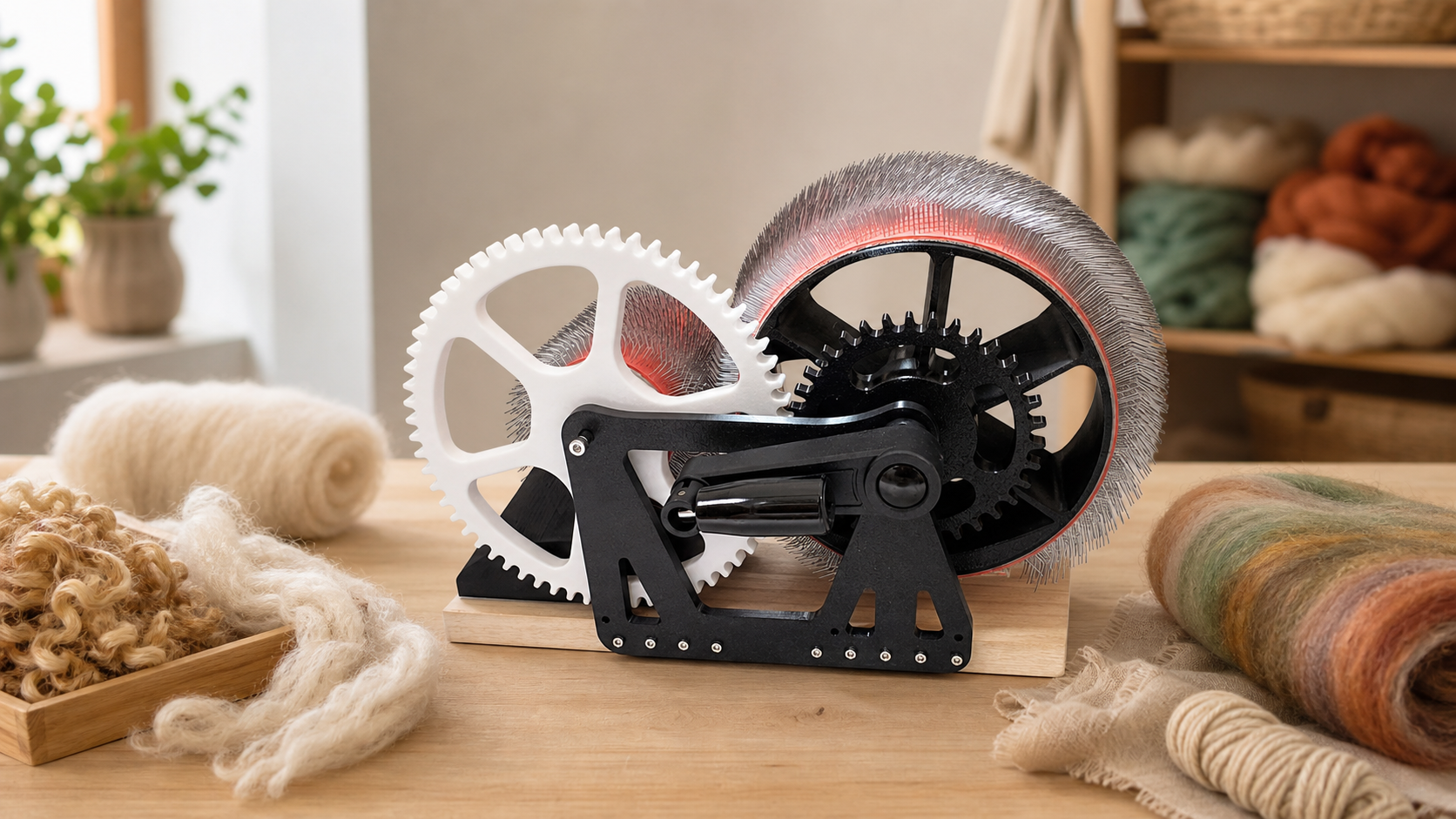
The Studio Drum Carder is best approached as a small-studio layering surface for wool, alpaca, dyed locks, and art batt prep. It cannot decide your palette for you, but it can help you repeat a calmer process when your feed order and pass count are intentional.
Before checkout or a setup question, review the homepage, the product page, and the contact page. If you need help thinking through fiber type, color placement, or basic setup, describe the fiber, the color goal, and what happened on the first pass.
Make Color Control Easier
Use the Studio Drum Carder product page to compare your fiber prep routine, color goals, and small-studio workflow before you buy.
FAQ
Can I fix a hard color stripe without ruining the batt?
Usually, yes. Split the batt into strips, break up the strongest color, place it between quieter strips, and run one light return pass. Stop as soon as the stripe looks useful.
Why did my batt become muddy?
Muddy color usually comes from too many strong shades, too many passes, or repeated blending after the colors were already integrated enough. Use fewer colors and pause sooner next time.
Should I add white fiber to soften streaks?
White can help, but it also brightens many colors. A gray, natural, or related shade may soften the streak more gently. Test a small strip before changing the whole batt.
Are streaks always bad in art batts?
No. A planned streak can create strong yarn movement or a clear felted design. The problem is not visible color; the problem is color that looks accidental or drafts poorly.
How do I repeat a blend that worked?
Record the base fiber, accent colors, feed order, pass count, and any repair steps. Photos of the starting fiber and finished batt make the next batch much easier to match.