
Blog
Why Batts Have Thick Edges and Thin Centers
Jul
Quick answer: batts often have thick edges and thin centers because fiber is being fed more heavily at the sides, the hands drift outward during feeding, edge buildup is not being cleaned, or the batt is being removed unevenly. Fix it by feeding lighter, centered layers, weighing or dividing fiber before the pass, checking the edges often, and using a small test batt before a full project.
An uneven batt can be annoying, but it is also useful feedback. Thick edges and a thin center usually mean the fiber path is uneven. The carder may be doing exactly what your hands asked it to do, even if that was not the plan. Once you learn to see where the fiber is loading, you can adjust technique before the entire batt becomes ropey at the sides and weak in the middle.
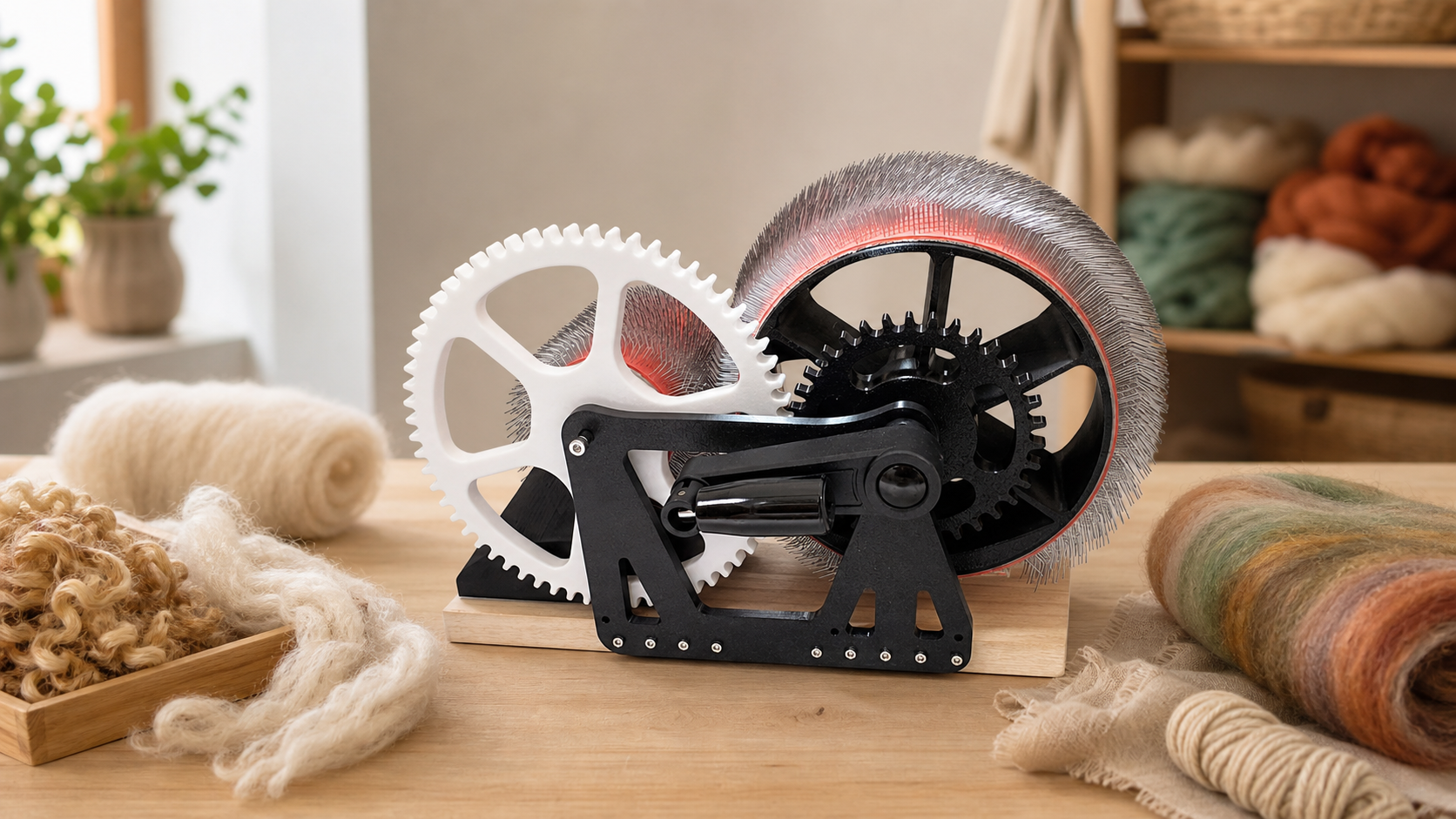
This guide focuses on practical, cautious fixes for wool, alpaca blends, and art batts. It does not assume that every batt must look factory-perfect. A little variation can be fine, especially for textured spinning. The concern is when uneven loading makes the batt hard to remove, hard to spin, or inconsistent from one project to the next. For product context, see the Studio Drum Carder and the DrumCarder home page.
Watch Where Your Hands Feed The Fiber
Many uneven batts begin with hand placement. When people worry about filling the drum, they often spread fiber outward too early. The sides receive more fiber than the center, especially if the hands naturally drift left and right during feeding. After a few layers, the edges become bulky and the middle looks starved.
For the next test, deliberately feed the center first. Use a light, even strip and let the drum take it. Then add small amounts to each side only if the center has enough fiber. You are not trying to build walls at the edges. You are trying to build a sheet.
Divide The Fiber Before Carding
If you feed by handfuls, the batt depends on guesswork. A simple improvement is to divide the fiber before the pass. Make several small portions that are close in size. If you weigh fiber, use that. If you do not, make visual portions and keep them in order. Feed each portion across the drum with attention to the center.
This helps with repeatability. It also prevents the common mistake of feeding the neatest handfuls first and dumping the awkward leftovers at the edges near the end. The last layer matters as much as the first one.
Use Lighter Layers Instead Of One Heavy Pass
A heavy pass can hide uneven feeding until the batt is already loaded. Lighter layers give you more chances to correct. If the center looks thin after the first layer, add there next. If the edges are building too quickly, avoid them for a moment. Think of the batt as something you place gradually, not something you dump and hope to fix later.
This is especially helpful with alpaca blends and textured art batts. Soft fibers can compact, while decorative pieces can collect at the edges if fed in clumps. Keep layers thin enough that you can still see how the batt is forming.
Clean Edge Buildup Before It Shapes The Next Batt
Leftover fibers at the sides can make the next batt start unevenly. If the edges already hold wisps from the previous project, new fiber may catch there first. The center then receives less material, and the side buildup becomes worse with every pass.
Before blaming your feeding technique, clean the carder. Remove visible fiber, inspect the edges, and clear the feed area. The guide on how often to clean a drum carder explains when a quick reset is enough and when a more careful cleanup makes sense.
Check For Overfilled Sides During The Pass
Do not wait until removal to inspect the batt. Pause during the session and look at the drum from the front. Are the sides rising faster than the center? Is one edge heavier than the other? Is fiber wrapping or collecting near the licker-in? Early inspection prevents a small imbalance from becoming the whole batt.
If the sides are already thick, do not keep feeding them. Add a light center layer, then reassess. If the center will not take fiber, the batt may be too loaded or the fiber may need another approach. Removing and rebuilding a small test batt is better than forcing a poor full-size batt.
Remove The Batt Evenly
Sometimes the batt forms evenly but comes off unevenly. If you pull harder at one side, stretch the center, or rush removal, the edges can look thick while the middle thins out. Removal is part of batt quality, not an afterthought.
Use the correct removal method for your carder. Work calmly and support the batt as it releases. If the batt resists at the edges, check for wrapped or caught fiber before pulling harder. A careful removal protects both the batt and the carding cloth.
Decide Whether The Batt Needs Perfection
For spinning a smooth, predictable yarn, thick edges and a thin center may be a real problem. For textured art yarn, felt layouts, or experimental color work, a little unevenness may be acceptable. The question is not whether every batt is identical. The question is whether the batt supports the next step.
If you are making repeatable batts, take notes: fiber weight, number of layers, where you fed each layer, number of passes, and removal method. If you are making one-of-a-kind art batts, keep the structure stable enough that the batt does not fall apart or hide dense strips at the edges.
Make Small-Studio Batts More Predictable
A good carding setup makes it easier to feed light layers, inspect the batt, and clean between projects. Compare the Studio Drum Carder for compact wool, alpaca-blend, and art batt work.
FAQ
Why are the edges of my batt thicker than the center?
The usual cause is uneven feeding. Your hands may be placing more fiber at the sides, or leftover edge fiber may be catching new fiber before the center fills.
Can cleaning fix thick batt edges?
It can help if edge buildup is shaping the next batt. Clean the sides and feed area, then test with a light centered layer before making a full batt.
Should I run the batt through again to even it out?
Sometimes, but do not rely on extra passes alone. If the batt is very edge-heavy, split or open it gently and feed lighter, centered layers. Too many passes can flatten texture or muddy colors.
Does alpaca make uneven batts more likely?
Alpaca can compact or drift differently from wool, especially if used heavily. Blend modest amounts first, support it with wool when useful, and watch how the center fills.
How do I make repeatable batts?
Divide or weigh fiber before carding, feed in light layers, check the drum during the pass, clean between projects, and write down the method that worked.