
Blog
Why the Handle Feels Hard to Turn on a Drum Carder
Jul
Quick answer: a drum carder handle feels hard to turn when the carder is asking for a stop-and-check moment. The cause may be a heavy feed, poor fiber preparation, leftover buildup, an unstable bench, or a part that needs product-specific help. Do not force the handle. Empty the carder, test the handle with no fiber, then restart with a thin layer so you can tell whether the resistance comes from the fiber, the setup, or the tool.
This guide is about handle feel, not fiber wrapping itself. If you can already see strands circling the licker-in, use the guide on why fiber wraps around the licker-in. If the handle simply feels heavier than normal and you are not sure why, work through the checks below in order.
A steady hand-cranked rhythm should feel predictable. You may feel more load as the drum fills, but the effort should not jump suddenly or feel scratchy. The goal is to separate normal carding load from a problem that needs cleaning, lighter feeding, a better bench position, or help through the contact page.
Use The Empty-Handle Test First
Remove the fiber load and turn the handle gently with the carder empty. This single check prevents guesswork. If the empty carder turns smoothly, the earlier resistance probably came from fiber amount, fiber prep, static, or buildup. If the empty carder still feels rough, uneven, or unusually heavy, stop and inspect the setup before adding more fiber.
Do this test slowly. Listen for scraping. Feel whether the handle has one hard spot at the same point of rotation or whether the whole turn feels heavy. A repeated hard spot is different from general load. Do not diagnose by strength. Diagnose by the pattern you feel.
Separate Three Types Of Resistance
Handle resistance usually falls into three practical groups. First is normal load: the handle feels steadily heavier as fiber builds, then improves after the batt is removed. Second is feed load: the handle gets hard right after a thick or compacted layer enters. Third is stop-now resistance: the handle changes suddenly, feels uneven, or makes you want to push through a hard point.
Normal load is part of carding. Feed load means reduce the amount and open the fiber better. Stop-now resistance means pause, clear the work area, and inspect. Treating all three the same is how small issues become frustrating sessions.
Restart With A One-Handful Test
After the empty-handle test, restart with a very small amount of opened fiber. Do not use the same bundle that caused the problem. Make a thin, even layer and let the teeth take it at a calm pace. If the handle stays comfortable, the earlier batch was too dense or not opened enough.
If the handle becomes hard again with a tiny amount, stop. That points toward leftover buildup, a workspace issue, fiber condition, or a tool-specific question. A small restart test is useful because it removes pride from the decision. You are not trying to finish the batt; you are asking the carder what changed.
Check The Bench And Body Position
A handle can feel wrong even when the carder is fine. A wobbly table, poor clamp position, crowded work surface, or awkward wrist angle makes every turn feel heavier. Before blaming the fiber, make the setup simple: stable bench, clear handle path, good light, fiber placed where you can feed it without reaching across the tool.
Stand or sit so your shoulder is relaxed and the handle path feels natural. If you are twisting your wrist or bracing the carder with your other hand, the workspace is adding resistance. A smoother bench setup also helps you notice real changes in handle feel sooner.
Look At Fiber Prep Without Overfocusing On The Tool
Compacted locks, damp fleece, sticky residue, and dense strips of fiber can all make the handle feel harder. The carder may be trying to open material that should have been teased by hand first. This is common when a maker wants to save time and feeds a larger chunk than the carder can comfortably take.
Open the fiber, remove obvious tangles, and test a small portion. For longwool or textured locks, keep some structure but avoid feeding a rope. For alpaca or very fine blends, use light layers and watch whether the fiber transfers cleanly. If static is part of the session, the guide on troubleshooting static while drum carding wool may be more useful than turning harder.
Clean Only What You Can Reach Safely
Old fiber can create drag, especially near edges, the feed area, and places where short fibers hide. Give the carder a dry, gentle reset before another test. Remove visible fiber, check the sides, and clear the areas described in the cleaning guide. Avoid scraping, soaking, or pushing tools into places you cannot see.
If cleaning improves the empty-handle test, build a shorter cleanup habit after each session. If cleaning does not improve it, do not keep repeating the same forceful turn. The guide on how often to clean a drum carder can help you choose a routine that fits wool, alpaca, and art batt work.
Know When To Stop And Ask
Stop using the carder if the handle is stiff while empty, the same hard spot returns every rotation, you hear scraping, or the tool shifts in a way that does not match the normal setup. Write down the fiber type, whether the empty test changed anything, and whether the light-feed test felt different. Those notes make a product question much easier to answer.
If the carder turns well when empty and with a small opened layer, you can continue cautiously with smaller batches. If it does not, pause the project. Comfortable carding depends on rhythm, not force.
Choose A Carder That Fits Your Workbench Routine
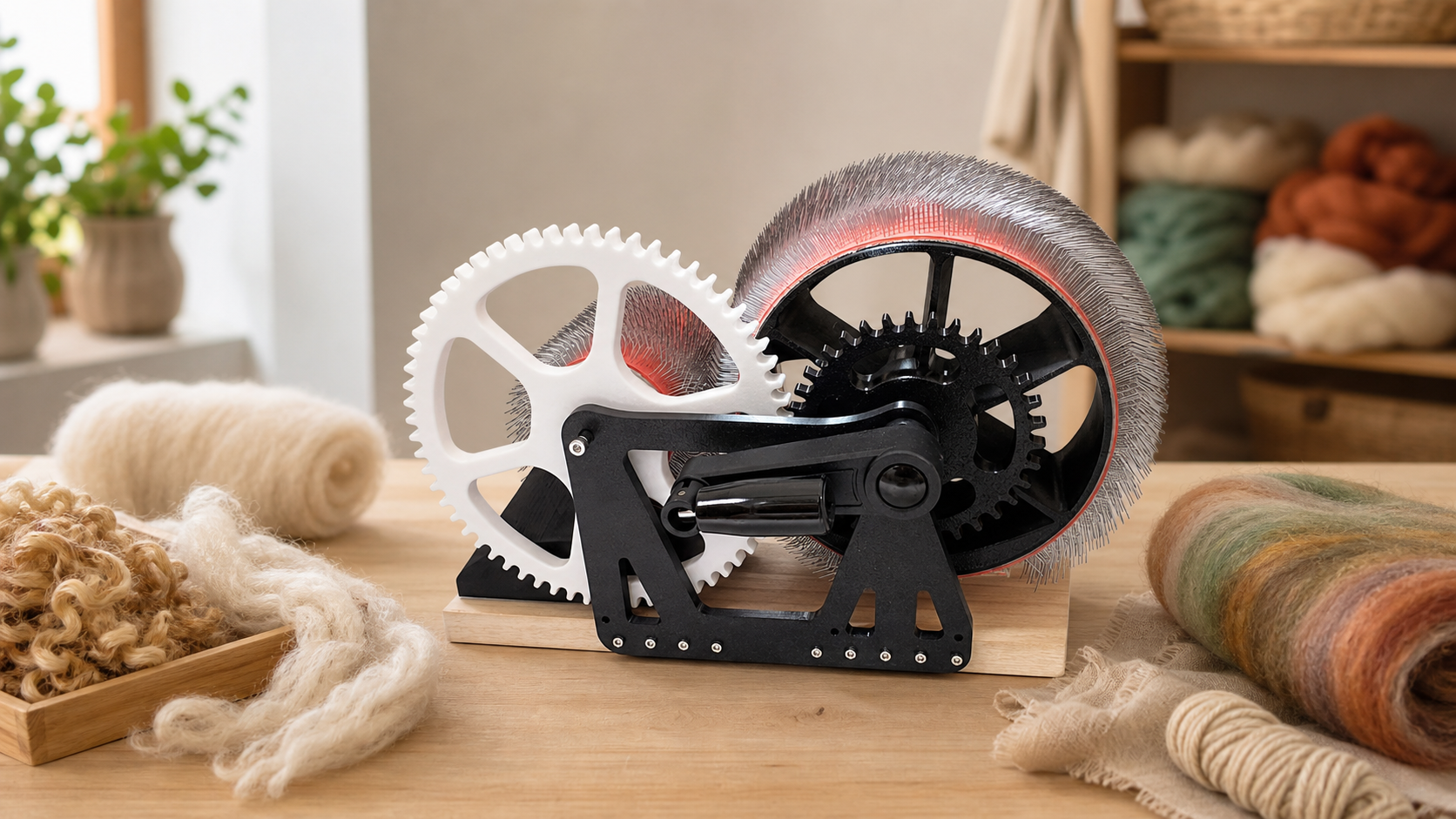
A compact drum carder should support controlled feeding, easy cleanup, and a comfortable handle rhythm. Compare the Studio Drum Carder when you want a focused option for small wool, alpaca-blend, and art batt sessions.
FAQ
Is a hard-to-turn handle always a serious problem?
No. It can be as simple as too much fiber or poor prep. The important step is to stop early, empty the carder, and test again before forcing the handle.
What should I test before adding more fiber?
Turn the handle with the carder empty, then test a thin layer of opened fiber. Those two checks help separate tool feel from feed load.
Can the workbench make the handle feel harder?
Yes. A wobbly table, awkward wrist angle, poor clamp position, or clutter near the handle can make normal carding feel harder than it should.
Should I keep turning if the handle hits a hard spot?
No. Stop at a repeated hard spot or sudden resistance. Clear the work area, inspect safely, and ask for product-specific help if the empty carder still feels wrong.
How do I restart after a stiff-handle moment?
Restart with a small, opened layer and a calm rhythm. If the handle feels normal, increase fiber slowly. If resistance returns immediately, stop and inspect again.