
Blog
Why Fiber Wraps Around the Licker-In
Jul
Quick answer: fiber usually wraps around the licker-in because too much fiber is being fed at once, locks are not opened enough, the fiber is too long or sticky for the pass, the carder needs cleaning, or the handle is being turned through resistance instead of stopping early. Clear wrapped fiber gently, reduce the batch size, and test with a thin layer before returning to a full batt.
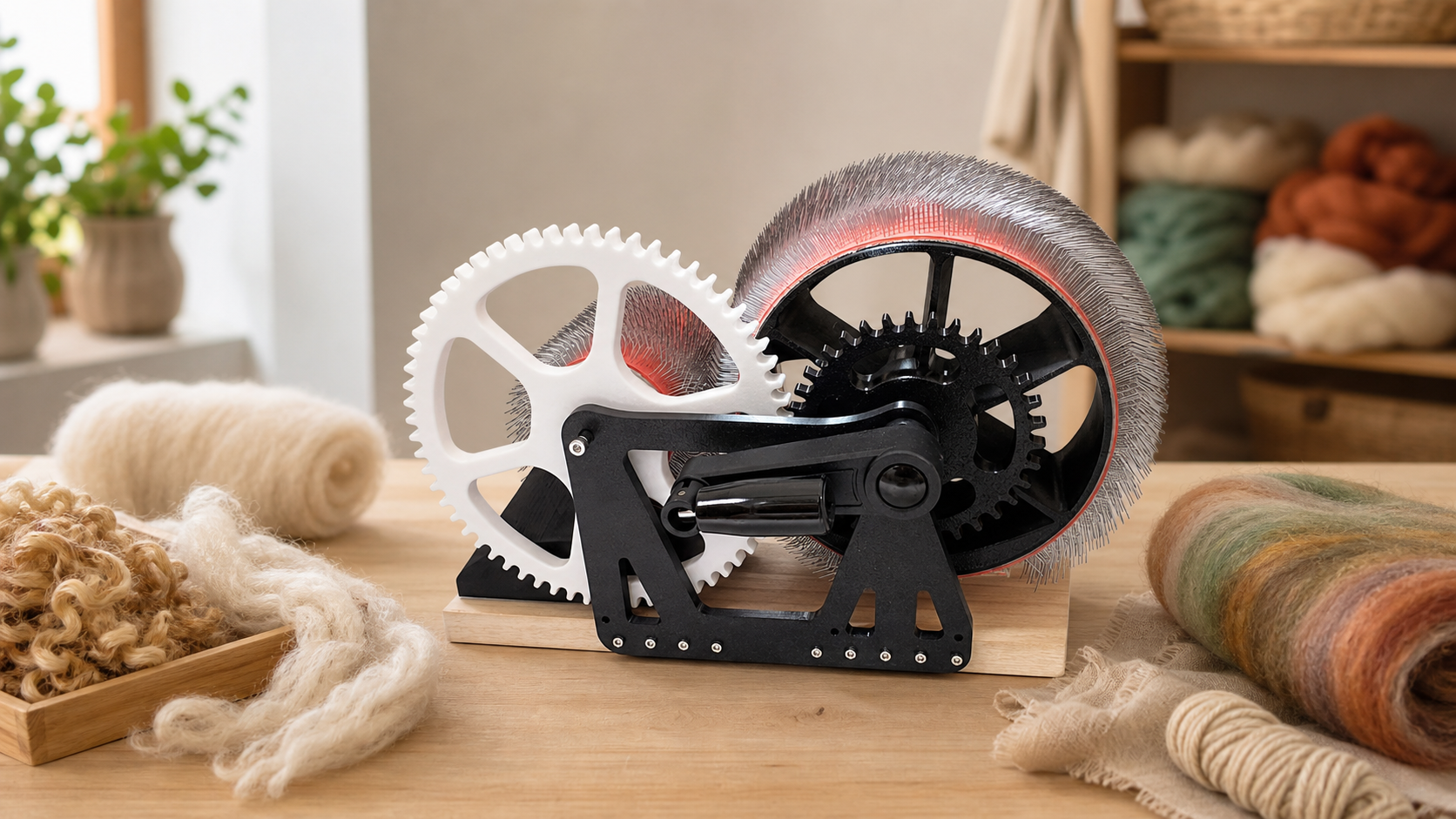
The licker-in is the first area many fibers meet before they transfer to the larger drum. When everything is working well, it helps pull in a controlled layer. When the session is overloaded or the fiber is not ready, that same area can collect strands, twists, and compacted curls. The result is a frustrating wrap that makes the carder feel less smooth and can leave the batt uneven.
This is a care and troubleshooting issue, not a reason to force the machine. If fiber starts wrapping, pause. The safest fix is usually smaller, cleaner, slower carding. For a compact product to include in your setup notes, see the Studio Drum Carder product page. For broader care habits, keep the drum carder cleaning guide nearby.
Overfeeding Is The First Thing To Check
Most wrapping starts with too much fiber. A dense handful looks efficient, but the carder may not have enough open space to pull the layer forward cleanly. The excess fiber searches for somewhere to go, and the licker-in becomes the catch point. This can happen even with good wool if the layer is too thick.
Reduce the amount until the carder takes the fiber without pushing back. Think in wisps, not clumps. If you can see a heavy rope of fiber entering the feed area, lighten it before turning the handle. A thin layer gives the teeth room to work and gives you time to see problems before they wrap tightly.
Open Locks Before They Reach The Carder
Long locks and compressed fleece need preparation. A drum carder is helpful, but it is not a magic opener for every tangled lock. If fiber enters as a compacted strip, the licker-in may grab part of it while another part stays attached, creating a wrap. This is common when people move too quickly from washed fleece to carding without teasing or opening the fiber.
Before carding, separate locks gently and remove obvious mats, weak tips, and debris. If the fiber resists opening by hand, test a very small amount first. Do not use the carder to pull apart knots that should have been removed during prep.
Slow Down When The Fiber Starts To Grab
Wrapping often gives a warning. The handle may feel a little heavier. The fiber may stop transferring evenly. You may see a strand circling the licker-in instead of moving onward. Stop at that early point. Continuing usually tightens the wrap and makes cleanup harder.
Hand-cranked carding should feel controlled, not forced. If you have to lean into the handle, something is wrong: too much fiber, wrapped fiber, a cleaning issue, or a mechanical fit problem. The guide on why the handle feels hard to turn explains how to separate normal load from a stop-and-inspect problem.
Check Fiber Condition
Sticky, greasy, damp, or very fine fiber can wrap more easily. Grease and residue can make fibers cling together. Dampness can make the batch compact instead of moving freely. Very fine fiber may drift and catch at edges if the room is dry or static is high. None of these conditions means the fiber is useless, but they do mean the batch needs care.
Use a small test before committing the whole project. If the test wraps, change one factor at a time: feed less, open more, clean the carder, adjust room conditions, or choose a supportive wool base. Changing everything at once makes it hard to learn what helped.
Clean Wrapped Fiber Without Making It Worse
When fiber wraps around the licker-in, stop turning the handle. Remove loose fiber first, then gently lift the wrapped strands in the direction that releases them most easily. Use the appropriate cleaning tool if one came with the carder. Avoid digging, yanking, or twisting against the teeth.
If the fiber is tight, work slowly. A few careful minutes are better than bending carding cloth or pulling a stuck strand through resistance. If you cannot remove the fiber safely, stop and ask for product-specific help through the contact page rather than risking damage.
Prevent Wrapping With A Smaller Test Batt
After clearing a wrap, do not restart with the same large bundle. Make a small test batt. Feed half the amount you used before. Keep the layer even across the feed area. Turn the handle calmly and watch transfer. If that test works, slowly increase the amount. If it wraps again, the fiber may need more prep or the carder may need a fuller cleaning.
For art batts, layer decorative materials sparingly. Locks, sparkle, silk, and textured add-ins can catch if they are used in heavy strips or buried under too much wool. Place accents intentionally and avoid repeated passes that turn texture into tangles.
When The Problem Is Not Your Technique
Sometimes wrapping points to a tool or fit issue. If wrapping happens with clean, opened wool in very light layers after cleaning, compare what you see with the product instructions. Look for obvious obstruction, loose fiber in side areas, or a part that appears out of position. Do not adjust parts beyond normal care unless the maker’s instructions describe that step.
Also review your workspace. A wobbly surface, awkward angle, or rushed session can make feeding uneven. Good carding starts before the fiber touches the tool: stable bench, clean hands, opened fiber, and enough light to see the first hint of wrapping.
Use A Carder That Fits Your Batch Size
Wrapping is easier to avoid when the carder, fiber amount, and studio routine match each other. Compare the Studio Drum Carder for compact wool, alpaca-blend, and small art batt sessions.
FAQ
Why does fiber wrap around the licker-in instead of moving to the drum?
The common causes are overfeeding, compacted locks, sticky or damp fiber, static, leftover fiber, or continuing to turn after the fiber starts to catch.
Should I pull hard to remove wrapped fiber?
No. Stop turning, remove loose fiber, and lift the wrap gently. Pulling hard can bend teeth or make the wrap tighter. If it will not release, ask for product-specific guidance.
Can long wool locks cause wrapping?
Yes. Long or compressed locks can catch if they are not opened first. Tease them gently, remove mats, and feed a lighter layer to see how the carder handles them.
Does cleaning help prevent licker-in wraps?
Often, yes. Leftover fibers create catch points. Clean the carder before testing technique, especially after dark fiber, alpaca, textured add-ins, or a previous wrap.
When should I stop using the carder?
Stop if the handle becomes hard to turn, fiber wraps tightly, you hear scraping, or you cannot clear the area safely. Do not continue through resistance.