
Blog
How Often Should You Clean a Drum Carder
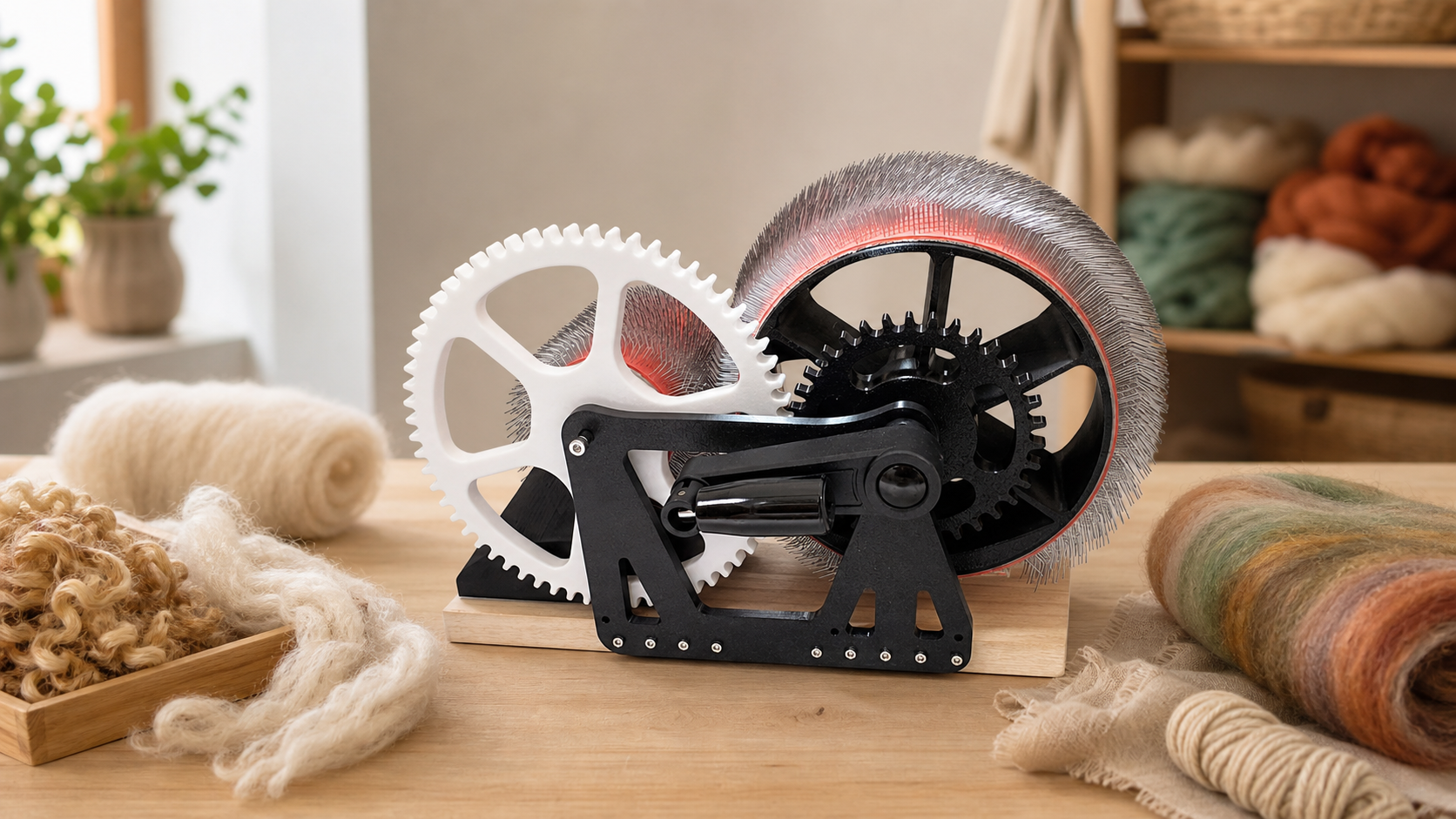
Jul
Quick answer: clean a drum carder by trigger, not by a fixed number of minutes. Do a quick reset after every session, a color-safe reset before moving from dark to light fiber, a texture-safe reset after locks or sparkle, and a slower inspection after messy or heavy batches. The right frequency is the one that protects the next batt.
This article is a cleaning calendar. It does not repeat the full cleaning routine. For the step-by-step care method, use the drum carder cleaning routine. Here, the question is when to clean lightly, when to clean carefully, and when to stop a session for inspection.
A small studio benefits from predictable reset habits. You can keep the carder ready without turning maintenance into a chore. For current product context, see the Studio Drum Carder product page.
Use Four Cleaning Triggers
The easiest schedule has four triggers. First, end-of-session: remove visible fiber and clear the work area. Second, color change: clean before a pale or natural batt follows dark or bright fiber. Third, texture change: inspect after locks, nepps, sparkle, silk, or other add-ins. Fourth, feel change: stop when the handle, transfer, or batt removal feels different.
These triggers are easier to remember than a strict calendar. They also match how people actually card. A quiet wool practice session may need only a quick reset. A dramatic art batt may need more attention before the next project starts.
Quick Reset: After Ordinary Sessions
A quick reset is the default. Remove the batt, lift loose fiber, check the edges, and clear obvious leftovers near the feed area. This is the habit that keeps small problems from building. It should be short enough that you do it even after a tired session.
Use the quick reset after similar wool batts, practice blends, and sessions where the next project will use related colors. The goal is not perfection. The goal is a clean enough start that the next batt is not surprised by the last one.
Color Reset: Before Light Or Clean Batts
Clean more carefully when the next batt will reveal contamination. Dark wool before white wool is the obvious example, but dyed locks before natural alpaca can matter too. Even a few fibers can show up in a pale batt and make the project look careless.
Use a color reset when moving from dark to light, bright to natural, saturated dye to pale neutrals, or sparkle to plain wool. If the next batt is color-sensitive, clean first and test with a small practice wisp before using the real fiber.
Texture Reset: After Add-Ins
Textured ingredients hide differently from ordinary wool. Locks can catch at edges. Nepps can sit low in the teeth. Sparkle may appear later in a project where it does not belong. Silk and fine fibers can cling quietly until the next batt pulls them forward.
After textured work, inspect slowly in good light. This is especially important if the next project is a smooth spinning batt. A texture reset protects both projects: the art batt stays intentional, and the smooth batt stays smooth.
Feel Reset: When The Carder Behaves Differently
Sometimes the carder tells you the schedule changed. The handle may feel heavier, fiber may transfer unevenly, a batt may lift with dirty edges, or small clumps may stay behind. Do not wait for the end of the session when the tool feels different. Pause and inspect.
A feel reset can prevent wrapping, streaks, and overworked fiber. If the handle is the issue, use the hard-handle guide. If fiber wraps around the licker-in, use the licker-in wrapping guide.
Monthly Inspection For Busy Makers
If you card often, add a slower inspection after a busy period. Look at the workbench, edges, feed area, storage cover, and any place fiber tends to collect. This is not a deep repair session. It is a calm check that helps you notice gradual buildup before it becomes normal.
For occasional users, the monthly inspection may simply happen after several projects. The timing matters less than the habit. If the carder has been stored for a while, inspect before the first new batt so dust and old fiber do not join the project.
Write The Next Fiber On The Calendar
A useful cleaning schedule names the next fiber, not just the last one. Before you put the carder away, write or remember what comes next: white wool, dyed locks, alpaca, art-batt sparkle, or a customer project. That next material tells you how careful the reset needs to be.
This habit keeps cleaning practical. You are not trying to make the carder look unused after every session. You are preparing it for the next batt with enough care that color, texture, and hidden fibers do not surprise you.
Simple Frequency Table
| Situation | Cleaning level | Reason |
|---|---|---|
| Same fiber, same color family | Quick reset | Prevent ordinary buildup. |
| Dark to pale fiber | Color reset | Avoid visible carryover. |
| Locks, nepps, sparkle, silk | Texture reset | Remove hidden add-ins. |
| Heavy handle or poor transfer | Feel reset | Find the cause before continuing. |
Keep The Carder Ready For The Next Batt
A repeatable cleaning rhythm helps small-studio carding stay cleaner, calmer, and easier to troubleshoot.
FAQ
Do I need to fully clean a drum carder after every batt?
No. Similar batts may only need a quick reset. Clean more carefully when the next batt is color-sensitive, smooth, pale, or texture-free.
When should I clean before the next project?
Clean before the next project when leftover color, fiber type, or texture would change the result. The next batt sets the standard.
What is the biggest sign I waited too long?
Unexpected color, clumps, drag, wrapped fiber, or a batt that lifts with dirty edges can all mean the carder needed attention earlier.
Should I clean differently after alpaca?
Often yes. Fine fibers can hide between teeth and affect the next batt. Inspect more carefully before switching to another fiber type.
Can cleaning too aggressively cause problems?
Yes. Routine care should be dry and gentle unless product instructions say otherwise. Avoid scraping, soaking, and forcing tools into hidden areas.