
Blog
How to Store a Drum Carder Between Projects
Jul
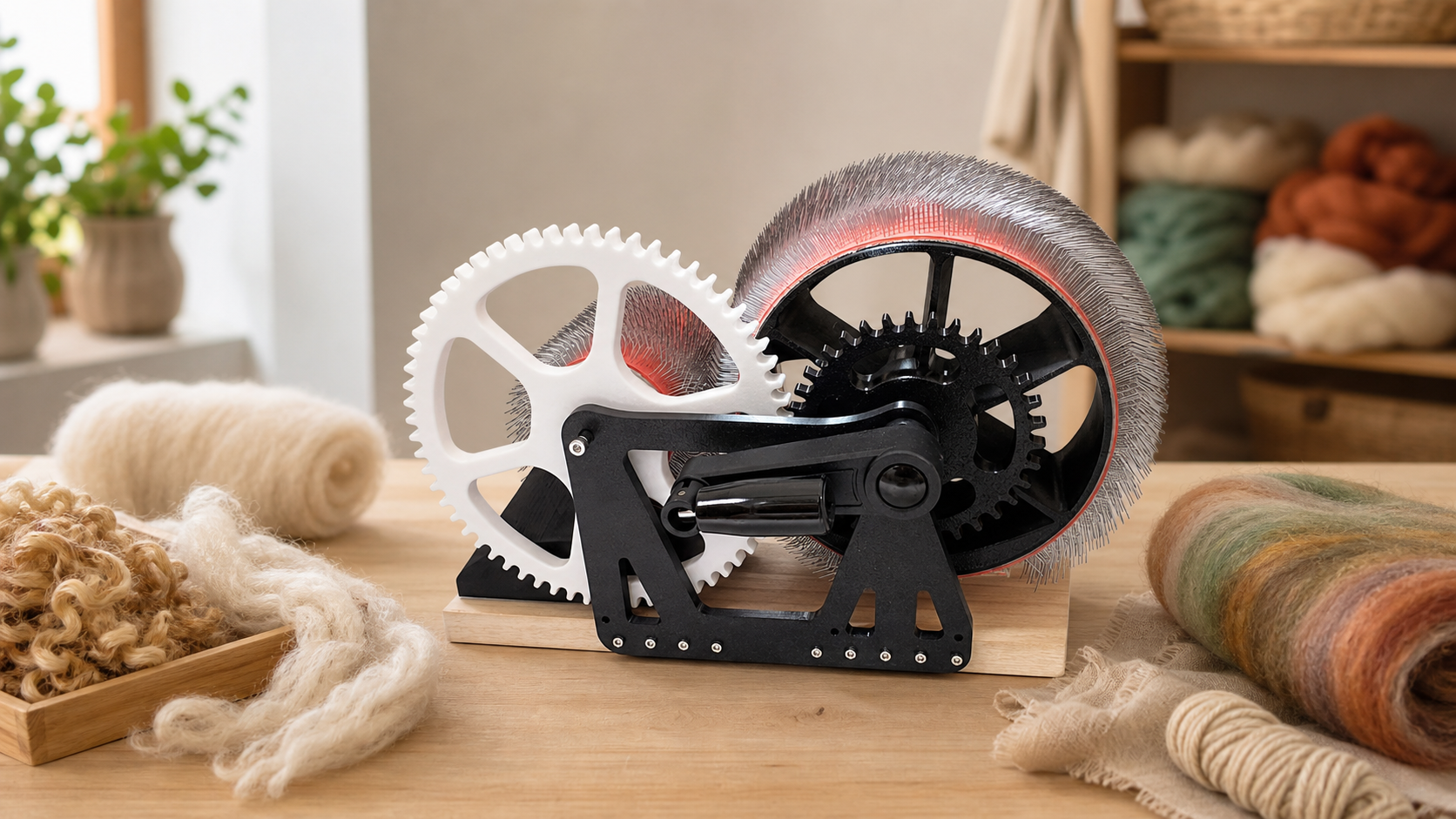
Quick answer: store a drum carder between projects by ending the session fully, clearing loose fiber gently, protecting the carding cloth, covering the tool from dust, keeping it dry, and storing finished batts separately. Good storage keeps the next wool, alpaca, or art batt session cleaner from the first minute.
A drum carder often sits at the center of changing fiber work. One project may use pale wool, the next a dark alpaca blend, then dyed locks, then textured art batt accents. If the tool is stored with yesterday’s fiber still around it, the next project starts with contamination, dust, and decisions you thought were already finished.
Storage is not a fussy extra step. It protects the working surface, the fiber, and the calm start of the next session.
Finish The Session Before Storage
Do not leave a half-finished carding session draped over the tool if you can avoid it. Remove the batt, label it, gather usable scraps, discard debris, and close the containers for any fiber that is not finished. If a blend must wait, store it in a labeled bag or tray instead of leaving it around the carder.
This matters most when changing color families. A few dark fibers left after one project can show up loudly in the next pale batt. A few textured locks can catch in a smooth spinning blend. Ending the session cleanly makes the next start honest.
Clear Loose Fiber Gently
Remove loose fiber according to the care method for your specific carder. The goal is to clear stray fiber, not to attack the carding cloth. Avoid harsh scraping, improvised metal tools, or rushed cleaning that could damage the working surface.
Check the feed area, drum surface, side edges, and the bench beneath the carder. Short fibers can collect in small places and travel into the next batt. If you are unsure about cleaning methods, ask through the contact page before trying something aggressive.
Protect The Carding Cloth
The carding cloth should never become a shelf. Do not set scissors, jars, mugs, dye tools, heavy bags, or finished batts on the drum. Even careful makers forget what is under a pile when the room gets busy. Give tools their own tray and keep the drum clear.
If you use a cover, choose one that is clean, loose, and unlikely to snag. A cover protects from dust and also tells the household or studio that the station is closed for the day. That simple visual cue can prevent other materials from landing on the tool.
Choose A Dry, Stable Storage Spot
Store the carder in a dry place where it will not be bumped, buried, or exposed to open dye containers. Avoid damp corners, leaky windows, and shelves where heavy items may slide into the tool. Moisture and dust are easier to prevent than remove from fiber later.
Think about traffic too. If the station sits in a shared room, give it a protected edge or shelf rather than the middle of a crowded table. A carder stored in a busy spot can quickly become extra counter space unless the station is clearly closed.
Store Finished Batts Separately
Finished batts need their own storage. Roll or stack them loosely, label them, and keep them away from dust, moisture, and heavy objects. Do not leave batts hanging from the carder or piled beside it. That creates clutter and makes the tool harder to inspect before the next project.
For spinning batts, protect loft and alignment. For felting batts, label the intended use. For art batts, photograph the texture and color placement before storage. The guide to art batt blending is useful when texture placement needs to be remembered after the batt leaves the bench.
Make A Restart Check
Before the next project, inspect the carder, open only the fiber for the current session, and review your notes. A stored tool should be ready to work, not a puzzle. If loose fiber remains from the last batch, clear it before feeding new fiber.
Review the DrumCarder Studio Fiber Carder from the DrumCarder homepage when planning your station. If your storage choice depends on current product details, confirm through the product page or support before making a permanent setup.
Change The Routine As Your Work Changes
A maker who cards one wool blend a month may need a simple cover-and-label habit. A dye studio that changes colors daily needs stricter cleanup and staging. A teacher preparing class kits may need a labeled bin for each project. A spinner working with fine merino may need a cleaner reset than someone preparing rustic rug fiber.
The storage routine should match the risk. More color changes, more texture, more shared space, or more valuable fiber all call for tighter habits.
Keep A Short Closing Note
Place a small note near the station: batt removed, fiber labeled, scraps sorted, drum clear, cover on. It sounds simple, but it helps when you finish a session tired. The best storage habit is the one you can follow every time.
If an order or return question affects where or how you store the product after purchase, check the refund and returns policy along with the product page.
Keep Your Drum Carder Ready Between Projects
Use DrumCarder for repeatable small-batch prep, then protect the tool with a simple cleanup, cover, and storage routine.
FAQ
Should I leave a batt on the carder overnight?
It is better to remove, label, and store the batt separately. Leaving fiber on the tool can create compression, clutter, and confusion before the next project.
Can I cover a drum carder with fabric?
A clean loose cover can help protect from dust if it does not snag or press on delicate areas. Follow current care guidance for the specific tool.
How clean should the carder be before storage?
Clear loose fiber and visible debris so the next project starts clean. Use the care method recommended for the product rather than harsh improvised cleaning.
Where should finished batts be stored?
Store them loosely in labeled containers or soft rolls, away from moisture, dust, and heavy objects.
What if the carding station is in a shared room?
Use labels, lidded containers, a cover, and a clear closing routine so other materials do not land on the carder between projects.