
Blog
How to Prepare Fiber for Weaving and Tapestry Texture
Jul
Quick answer: to prepare fiber for weaving and tapestry texture, use a drum carder to make controlled batts that can be stripped, pulled, or teased into weft bundles. Keep structure fibers separate from decorative fibers, preserve useful texture, and prepare small repeatable batches so the woven surface stays intentional instead of bulky by accident.
Weavers often think of carding as a spinner’s step, but tapestry and textured weaving can use carded fiber in a different way. A batt can become soft weft, raised texture, blended color patches, fringe material, or sample yarn for handspun accents. The goal is not always a smooth yarn. Sometimes the goal is a controllable fiber mass that sits beautifully in the shed or adds dimension after packing.
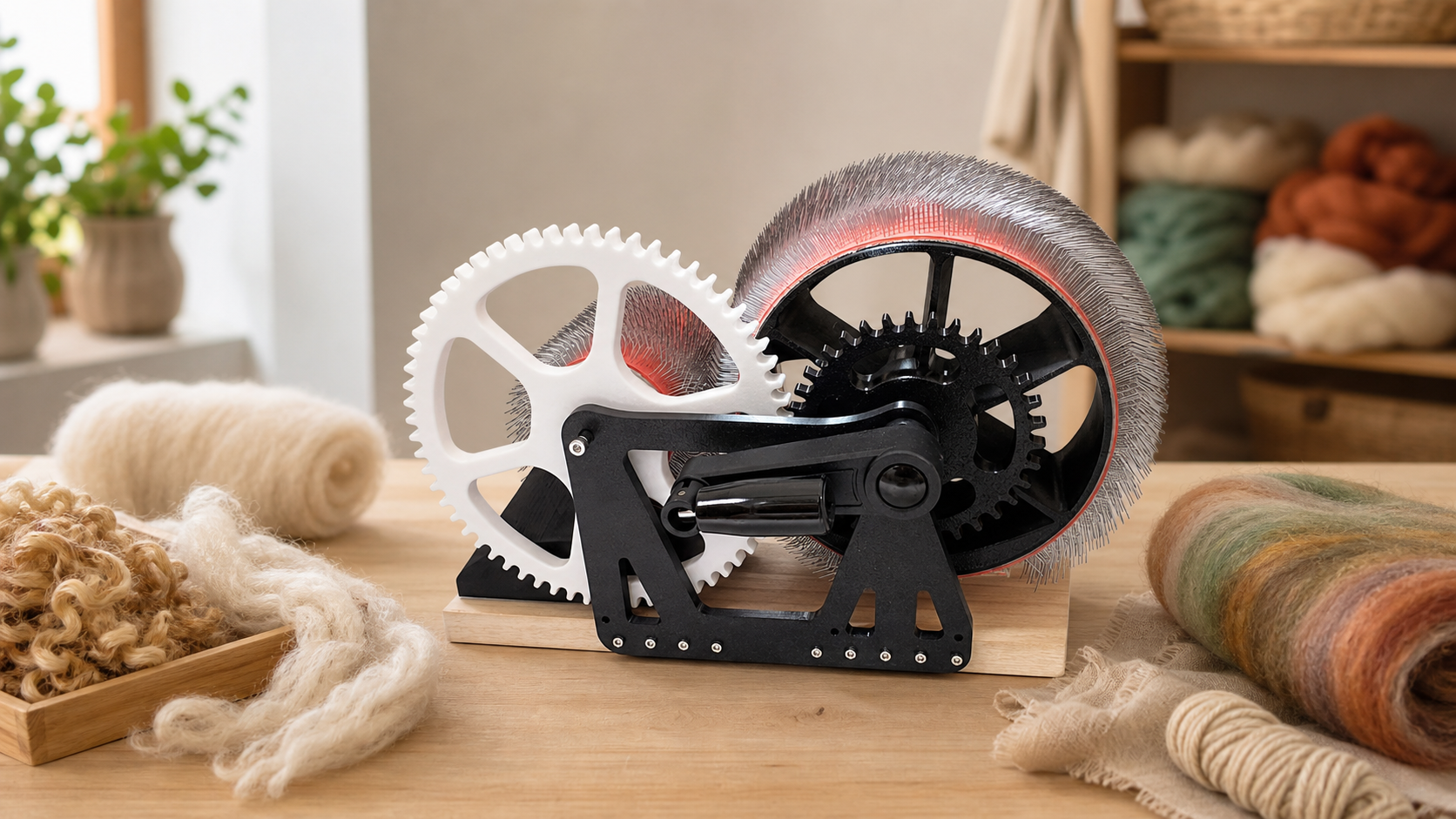
If that kind of studio work sounds familiar, compare this preparation routine with the Studio Drum Carder and the general DrumCarder site. The strongest workflow is the one that connects the carder to the loom, not just to the fiber basket.
Start With The Woven Surface You Want
Before opening fiber, decide what the cloth should feel like. Do you want a soft color haze, a raised cloud, a dense wool area, or a few dramatic locks? A tapestry wall piece can handle more sculptural fiber than a functional cloth. A scarf or wearable woven panel needs more restraint because loose fiber can snag or shed.
Write down the role of the fiber: background blend, accent line, pile-like texture, fringe, or handspun weft. That role determines how much blending you need. Background blends can be smoother. Accent texture should often stay less blended so the eye can still read the lock, color, or shine.
Separate Base Fiber From Texture Fiber
A useful weaving batt usually has a base. Wool is common because it grips, fills space, and can support other fibers. Texture fibers are different: locks, sari silk, sparkle, mohair, alpaca, plant fiber, or leftover yarn bits. If you mix everything at once, the texture can vanish or become too tangled to use cleanly.
Card the base first. Then add texture in a light final layer or as a separate mini batt. This gives you choices at the loom. You can weave a stable base bundle, then add a more textured strip where the design needs it. Tapestry rewards choices. A single overmixed batt gives you fewer of them.
Card For Pullable Strips
For weaving, the batt must come apart in useful pieces. Feed light layers across the drum, then test a pulled strip before committing to a full session. If the strip breaks into dusty bits, the fiber may be too short, dry, or overworked. If it pulls into a rope that is too thick, divide the batt into thinner sections and feed less next time.
Think in sample sizes. Prepare a small batt, weave a few inches, and watch how it packs. Some fibers bloom after beating. Others compress and lose their personality. A drum carder helps you repeat a blend once you like it, but the loom is still the judge.
Control Color For Tapestry Blocks
Tapestry often uses color in blocks, transitions, and small marks. A carded batt can support that if you keep color placement deliberate. For a soft transition, feed related colors in overlapping areas. For a stronger block, keep the colors in separate zones and pull strips from the area you need.
Avoid making every color into a full blend unless that is truly the design. Overblending can make woven areas look flat. Leaving some movement in the batt gives the finished surface more life, especially in landscape, abstract, floral, and animal-inspired pieces.
Prepare Fiber For The Shed
Once carded, turn the batt into weavable material. For soft weft, pull narrow strips and lightly draft them by hand. For texture, make shorter tufts and trap them with a stable weft. For fringe, pull longer sections in the same direction so the edge looks intentional. Keep a sample card beside the loom with notes about how each strip was prepared.
Do not overload the shed. A dramatic batt can look wonderful on the table and still be too bulky for the warp spacing. If you want high relief, plan for it with sett, warp strength, and finishing in mind. Carding solves preparation problems, not structural weaving problems.
Use A Repeatable Studio Routine
The Studio Drum Carder product page is worth reviewing if you need a compact tool for sampling woven texture blends. Keep your first routine simple: open fiber, card a base batt, add texture lightly, pull strips, weave a sample, then adjust. If you need help deciding whether the tool fits your space or order plan, use the contact page.
This approach is especially useful for small studios that move between spinning, felting, and weaving. The same carder can prepare fiber in several ways, but each craft needs its own finishing judgment. For weaving, the winning test is whether the fiber behaves in the warp and keeps the surface you wanted after packing.
Build Tapestry Texture From Better Fiber Prep
Use a compact carding workflow to create pullable strips, color zones, and texture samples before committing them to the loom.
FAQ
Can carded fiber be woven without spinning it first?
Yes, in some tapestry and texture work. The fiber is usually pulled into strips, trapped with stable weft, or used as surface texture. Test first because durability depends on the piece.
What fibers work best for woven texture batts?
Wool is a practical base because it grips and fills space. Locks, silk, alpaca, mohair, and sparkle can be accents, but they should be added lightly and tested on the loom.
Should tapestry batts be fully blended?
Only when you want an even color. Many tapestry effects look better when color and texture remain partly separated, giving the maker more control during weaving.
How do I keep bulky fiber from distorting the warp?
Use smaller strips, trap texture with stable weft, and sample with the same warp spacing before making the full piece. Do not force a thick batt into a tight shed.
Why use a drum carder for tapestry fiber?
It helps prepare repeatable blends, pullable strips, and controlled texture batches, especially when a studio makes many samples or wants consistent color movement.